Nina Taylor
Ice fishing is an exciting and challenging sport that requires the right gear. While most anglers focus on rods, reels, and bait, having the best net is just as important. A well-chosen net ensures a smooth landing, prevents fish loss, and minimizes harm to the catch. To choose the right net for ice fishing depends on several factors, including material, hoop size, handle length, and net depth. A poor choice can lead to tangled lines, broken nets, or even lost fish. This guide will break down everything you need to know to make an informed decision.
Why an Ice Fishing Net Matters
Many anglers rely on their hands or gaffs to land fish, but nets provide a safer and more efficient way. Ice fishing nets reduce the chances of losing a fish due to line breaks or bad handling. They also protect the fish if you practice catch-and-release.
According to a study published in Fisheries Research, using rubber-coated nets reduces fish mortality by 30% compared to traditional nylon nets. This is especially important for conservation-minded anglers who want to preserve fish populations.
Key Benefits of Using a Net
- Reduces fish stress: Handling fish with a net instead of bare hands prevents injuries.
- Prevents line breakage: A net secures the fish, reducing the strain on the line.
- Increases landing success: A good net helps secure fish even in tight ice holes.
Types of Ice Fishing Nets
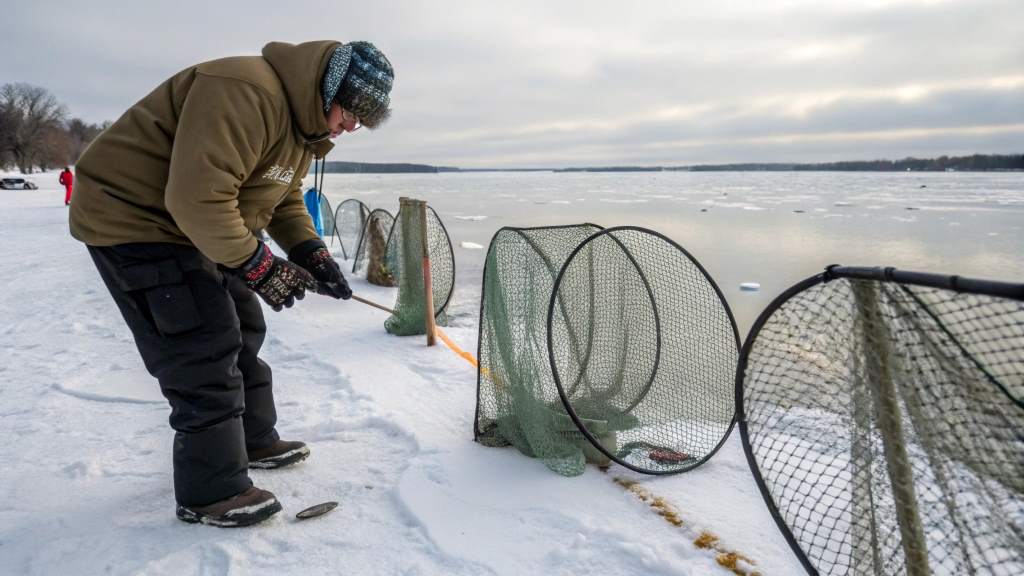
Choosing the right net starts with understanding different types available. Each design serves a specific purpose.
1. Rubber-Coated Nets
Rubber-coated nets are the best choice for catch-and-release fishing. They prevent fish from getting tangled and protect their slime coating, which is vital for survival.
Pros:
- Fish-friendly and reduces injury
- Tangle-free and easy to clean
- Durable and long-lasting
Cons:
- Slightly heavier than traditional nets
- More expensive than nylon options
2. Nylon Nets
Nylon nets are lightweight and affordable. However, they can cause more harm to fish due to their rough texture. They also tangle easily, making them harder to use.
Pros:
- Lightweight and inexpensive
- Easy to carry for long ice fishing trips
Cons:
- Harsh on fish and can remove protective slime
- Prone to tangling and fraying over time
3. Foldable and Collapsible Nets
Foldable nets are ideal for anglers who want a compact option. These nets fit easily into a fishing bag and are simple to deploy.
Pros:
- Space-saving and portable
- Convenient for traveling anglers
Cons:
- Less durable than solid-frame nets
- Some models may have weak hinges
4. Short-Handled vs. Long-Handled Nets
Short-handled nets work well in smaller ice fishing holes, while long-handled nets help when reaching for deeper water catches.
- Short-handle: Ideal for close-range fish landing
- Long-handle: Best for deep water and larger fish
How to Choose the Best Ice Fishing Net
1. Consider the Hoop Size
The hoop size should match the type of fish you target. For small fish like panfish or perch, an 8-12 inch hoop is enough. For larger fish like pike or lake trout, a 20-30 inch hoop works better.
2. Check the Netting Material
Rubber-coated mesh is best for catch-and-release, while nylon is cheaper but less fish-friendly. Knotless designs further reduce fish injuries.
3. Choose the Right Handle Length
A short handle (12-18 inches) is great for close-range catches, while a long handle (24-48 inches) helps land fish from deep ice holes.
4. Net Depth Matters
Shallow nets work for small fish, but deeper nets (24+ inches) are better for larger species. A deep net prevents fish from flipping out.
5. Look for a Lightweight, Durable Frame
Aluminum frames are strong yet lightweight, making them ideal for ice fishing. Fiberglass is another option, though it can be slightly heavier. Eco-friendly biodegradable fishing lures are also gaining popularity among anglers, as they are a sustainable choice that minimizes environmental impact. These lures are designed to break down over time, reducing the pollution in aquatic ecosystems. Combining aluminum frames with eco-friendly lures not only enhances the fishing experience but also helps protect the environment.
Best Ice Fishing Nets on the Market
1. Frabill Conservation Series Landing Net
- Rubber-coated, fish-friendly net
- 36-inch handle for deep-water fishing
- Durable aluminum frame
2. EGO S2 Slider Net
- Extendable handle for versatility
- Knotless rubber mesh prevents injuries
- Ideal for medium to large fish
3. Clam Fortis Net
- Foldable for easy storage
- Heavy-duty frame for large catches
- Designed for ice anglers
Expert Tips for Using an Ice Fishing Net
- Keep the net submerged: This prevents the fish from panicking and increases your success rate.
- Scoop, don’t stab: Move the net smoothly under the fish instead of jabbing.
- Avoid dragging fish on the ice: This can damage their protective slime layer.
- Use both hands: A firm grip on the handle ensures stability.
- Clean and dry your net after use: This prevents freezing and prolongs its lifespan.
FAQs
1. What is the best net for catch-and-release ice fishing?
A rubber-coated net with a knotless design is the best option. It minimizes fish injuries and ensures safe handling.
2. Does handle length matter for ice fishing nets?
Yes. Short handles work for small ice holes, while long handles help reach fish in deeper water.
3. Can I use a regular fishing net for ice fishing?
Technically, yes, but an ice fishing net is better suited for cold conditions and smaller fishing holes.
4. What size net do I need for ice fishing?
For small fish, an 8-12 inch hoop is fine. For larger fish like pike, use a 20-30 inch hoop.
5. How do I keep my net from freezing?
Dry it after use and store it in an insulated bag. Some anglers use a silicone spray to prevent ice buildup.
Conclusion
Selecting the right net for ice fishing makes a huge difference in your success rate and fish safety. The best choice depends on your target species, fishing style, and conservation goals. Rubber-coated, knotless nets are the top choice for most anglers. Invest in a quality net to ensure a smooth and efficient fishing experience.
Would you like recommendations based on your specific fishing needs? Let me know your target fish species, and I’ll help you choose the right net for ice fishing!