Nina Taylor
Choosing the right fishing rod can make the difference between a frustrating day and a rewarding catch. Many beginners assume any rod will work, yet research from fisheries and outdoor recreation studies shows that using the correct gear can improve catch success by over 40 percent. At the same time, experienced anglers know that matching the rod to the fishing technique improves control, accuracy, and comfort. This guide breaks down everything you need to know in simple terms, so you can confidently pick the perfect fishing rods for any fishing style and condition.
Understanding Fishing Rod Basics
Before choosing a rod, you need to understand how rods are classified. Each feature affects how the rod performs in real conditions.
Rod Length
Rod length typically ranges from 4 feet to over 14 feet.
- Short rods offer better control and accuracy
- Long rods allow longer casting distance
For example, shorter rods work best in tight spaces like rivers with trees, while longer rods perform well in open water.
Rod Power
Power refers to how much force it takes to bend the rod.
- Ultra light and light for small fish
- Medium for general use
- Heavy for large species
A heavier rod helps you handle strong fish without losing control.
Rod Action
Action describes where the rod bends.
- Fast action bends near the tip
- Medium action bends in the middle
- Slow action bends throughout
Fast action rods are more sensitive, while slow action rods are more forgiving.
Types of Fishing Rods Explained
Different rods are built for different fishing techniques. Choosing the right type ensures better results.
Spinning Rods
Spinning rods are the most versatile and beginner friendly option. They work well with light lures and are easy to control.
Best for:
- Freshwater fishing
- Light tackle fishing
- Beginners
Casting Rods
Casting rods provide more precision and power. They are ideal for experienced anglers.
Best for:
- Target casting
- Heavy lures
- Bass fishing
Fly Rods
Fly rods are designed for fly fishing, which requires a unique casting method.
Best for:
- Trout fishing
- River fishing
- Lightweight artificial flies
Surf Rods
Surf rods are long and strong. They help you cast far into the ocean from the shore.
Best for:
- Beach fishing
- Saltwater environments
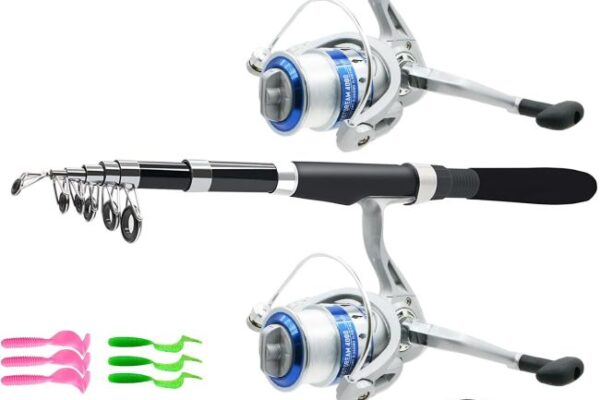
Telescopic Rods
These rods collapse into a compact size. They are perfect for travel.
Best for:
- Casual anglers
- Backpacking trips
Choosing the Right Rod for Freshwater Fishing
Freshwater fishing varies widely, so your rod choice depends on your target species and location.
For Small Fish
If you are targeting panfish or small trout, use:
- Light power rod
- Fast or medium action
- Length between 5 to 7 feet
This setup gives better sensitivity and control.
For Bass Fishing
Bass fishing requires a balanced setup.
- Medium to heavy power
- Fast action
- Length around 6 to 7 feet
This combination helps you detect bites quickly and set hooks effectively.
For River Fishing
River fishing often involves moving water.
- Medium power rod
- Medium action
- Slightly longer length for better reach
This helps maintain control in currents.
Choosing the Right Rod for Saltwater Fishing
Saltwater fishing requires stronger and more durable rods due to larger fish and harsher conditions.
Inshore Fishing
Inshore fishing targets species like redfish and snook.
- Medium to heavy power
- Fast action
- Corrosion resistant materials
Offshore Fishing
Offshore fishing involves larger species like tuna.
- Heavy power rods
- Strong backbone
- Reinforced guides
These rods handle extreme pressure and long fights.
Surf Fishing
Surf fishing rods are longer to cast beyond waves.
- Length between 9 to 14 feet
- Heavy power
- Durable construction
Matching Rods with Fishing Techniques
Your fishing method plays a big role in selecting the right rod.
Casting Techniques
If you prefer casting repeatedly:
- Use a lightweight rod
- Choose fast action for accuracy
Trolling
Trolling requires strength and stability.
- Use heavy power rods
- Look for strong guides and reels
Jigging
Jigging needs sensitivity and control.
- Medium to heavy power
- Fast action
Materials Used in Fishing Rods
The material affects performance, weight, and durability.
Fiberglass
- Durable and flexible
- Ideal for beginners
- Less sensitive
Graphite
- Lightweight and sensitive
- Better for detecting bites
- More fragile than fiberglass
Composite
- Mix of fiberglass and graphite
- Balanced performance
- Versatile for many uses
Key Factors to Consider Before Buying
To choose the right rod, consider these practical factors.
Target Fish Species
Different fish require different rod strengths. Larger fish need stronger rods.
Fishing Environment
Think about where you will fish. Lakes, rivers, and oceans all require different setups.
Skill Level
Beginners should choose simple and versatile rods. Advanced anglers can go for specialized options.
Portability
If you travel often, telescopic or multi piece rods are more convenient.
Common Mistakes to Avoid
Many anglers make simple mistakes when choosing a rod. Avoid these to improve your experience.
- Choosing a rod that is too heavy for the target fish
- Ignoring rod action and sensitivity
- Buying based on looks instead of function
- Not matching the rod with the reel
Expert Tips for Better Rod Selection
Experienced anglers follow these practical tips.
- Test the rod before buying if possible
- Match rod power with line strength
- Consider seasonal fishing conditions
- Keep a versatile rod for different situations
Conclusion
Choosing the right fishing rod becomes simple when you understand the basics. Focus on rod length, power, action, and type. Match your rod to the fishing environment and technique. This approach improves both comfort and success. Start with a versatile rod, then expand your gear as your skills grow. Take action today and choose a rod that fits your fishing style perfectly.
FAQs
What is the best fishing rod for beginners?
A spinning rod with medium power and fast action works best for beginners. It is easy to use and versatile.
How do I know which rod length to choose?
Short rods offer control, while longer rods provide casting distance. Choose based on your fishing location.
Is graphite or fiberglass better?
Graphite is more sensitive, while fiberglass is more durable. Your choice depends on your needs.
Can one rod work for all fishing types?
A medium power spinning rod can handle many situations, but specialized rods perform better for specific techniques.
How important is rod action?
Rod action affects sensitivity and hook setting. Fast action is ideal for quick response.