Nina Taylor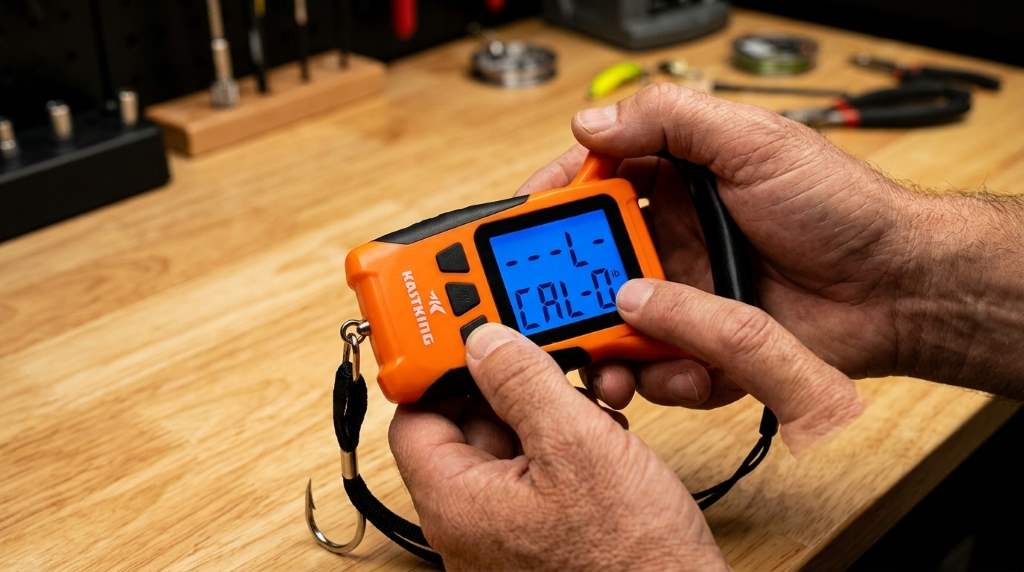
Yes, you can improve your KastKing fish scale’s accuracy by zeroing it and checking it against a known weight. KastKing’s Water Resistant Digital Fishing Scale supports weights up to 110 pounds and stores up to nine readings. Before heading out, test your Kastking fish scale at home. This simple check can reveal battery, zeroing, handling, or sensor problems before they affect your catch measurements.
What Calibration Means for a KastKing Fish Scale
Calibration means comparing the scale against a known reference weight and correcting measurement errors when the model supports adjustment. However, KastKing does not publish one universal calibration button sequence for every digital fish scale.
Instead, the safest approach starts with proper zeroing and controlled verification. KastKing’s product information confirms tare and multiple measurement units, while its manuals emphasize correct setup and operation.
Therefore, do not use random button combinations from another scale model. If your exact manual provides a calibration procedure, follow that procedure rather than applying generic digital scale instructions.
Why Your Fish Scale May Show Incorrect Weight
A scale can display an incorrect weight even when its sensor works correctly. Small setup errors often create larger differences than anglers expect.
For example, a weak battery can affect electronic performance during use. Likewise, a hanging fish can touch the boat, ground, cooler, or another object.
Temperature, moisture, debris, and mechanical stress can also affect your results. Fortunately, you can eliminate many of these factors before assuming the sensor needs calibration.
Common Causes of Inaccurate Readings
- Low or incorrectly installed batteries
- Failure to zero the scale before weighing
- Incorrect measurement units
- Fish touching another surface
- Sideways pressure on the hook or gripper
- Water or debris around moving parts
- Overloading the scale beyond its rated capacity
- Physical damage from drops or hard impacts
Prepare Your KastKing Scale Before Testing
Start by inspecting the scale for visible damage, dirt, corrosion, or loose components. Then install fresh batteries that match the requirements for your particular model.
KastKing’s Water Resistant Digital Fish Scale uses two AAA batteries according to its published manual information. Check your model’s battery compartment before installing replacements.
Next, place yourself in a stable area where the scale can hang freely. Avoid testing beside strong wind, moving water, or surfaces that can contact the suspended load.
Step 1: Turn On the Scale
Press the power button and allow the display to stabilize. Keep the hook or gripper completely unloaded during startup.
Watch the display for a stable zero reading before attaching anything. If the screen shows a nonzero value, remove all pressure from the weighing mechanism.
Do not attach a fish, bag, hook, or container until the scale reaches its normal unloaded state. This creates a reliable starting point for your accuracy test.
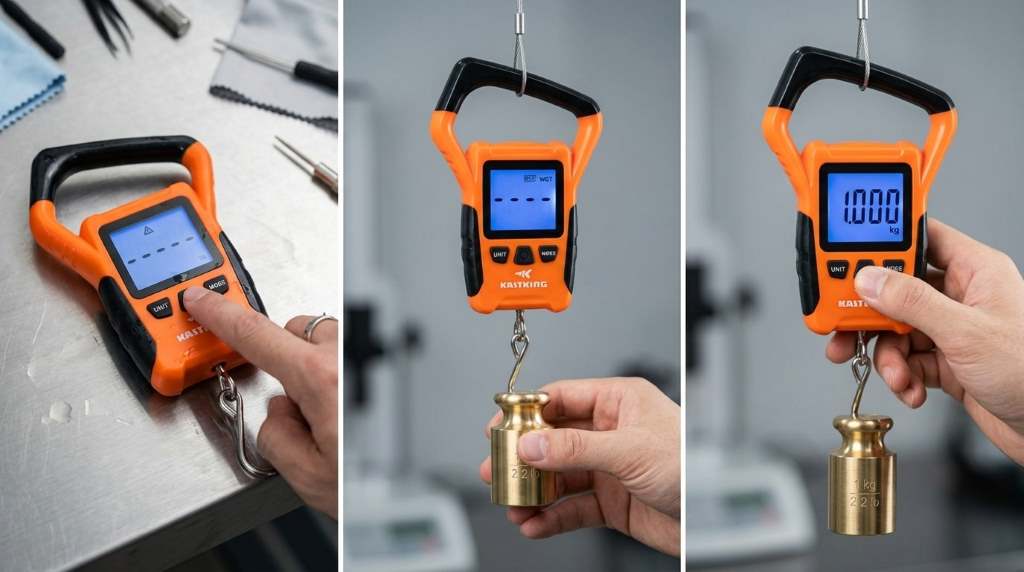
Step 2: Zero the Scale Correctly
Zeroing removes the effect of the empty weighing attachment from your measurement. It also gives the sensor a consistent starting reference.
Hold the scale in its normal weighing position and keep the attachment free. If your model provides a tare function, use it according to the manual.
KastKing lists a tare function on its Water Resistant Digital Fish Scale. Use tare when an empty container or other accessory remains attached during weighing.
When You Should Use Tare
Use tare when you need to weigh an item inside a container or bag. Attach the empty container first, then activate the tare function.
Afterward, the display should return to zero or the model’s equivalent zero indication. Add the fish or item only after the tare process completes.
Step 3: Select the Correct Measurement Unit
Choose the measurement unit that matches your intended result. KastKing’s Water Resistant Digital Fish Scale supports pounds, kilograms, and ounces.
For fishing records, pounds and ounces usually provide an easy format for comparing catches. However, kilograms may work better when your fishing records use metric measurements.
Always confirm the unit before comparing two readings. A unit mismatch can look like a serious calibration problem when the scale actually works correctly.
Step 4: Test the Scale With a Known Weight
The most practical accuracy check uses a weight with a reliable stated mass. A certified calibration weight provides the strongest reference for this test.
You can also use a known household item when you only need a basic consistency check. For example, a sealed product with a clearly printed weight can provide a useful reference.
Attach the reference weight carefully and let it hang freely. Keep your hand away from the weighing load once the measurement stabilizes.
Record the displayed value and compare it with the reference value. Repeat the test several times to determine whether the difference remains consistent.
Use Several Test Weights
A single test point cannot show how the scale performs across its entire range. Instead, test at low, medium, and higher weights when suitable references are available.
- Test a light reference weight first.
- Test a medium reference weight next.
- Test a heavier reference weight within the scale’s capacity.
- Repeat each measurement at least twice.
Consistent readings suggest that the scale remains stable across those test points. Large changes between repeated readings suggest a mechanical, battery, or sensor problem.
Step 5: Keep the Weight Hanging Freely
Positioning matters because contact can transfer part of the load away from the sensor. Keep the fish or test weight clear of the ground, boat, cooler, and other objects.
Also keep the scale vertical during testing. A sideways pull can place unusual force on the attachment and create an unreliable reading.
For fish, use the gripper or hook exactly as intended by your model. Keep the fish supported safely while preventing its body from touching nearby surfaces.
Step 6: Compare the Readings
Now compare your KastKing reading with the known reference weight. A small difference does not automatically mean that calibration has failed.
Digital scales have a specified resolution and accuracy range that vary by model. For example, KastKing lists fine measurement increments on its Water Resistant Digital Fishing Scale.
Focus on repeatability rather than one isolated reading. If the scale gives nearly identical results during repeated tests, its measurement system shows useful consistency.
What Consistent Error Tells You
Suppose a reference weight produces nearly the same offset every time. That pattern suggests a systematic measurement difference rather than random instability.
However, do not manually alter readings or create your own correction factor for tournament records. First check your exact model documentation for an approved calibration procedure.
What to Do If Your KastKing Scale Cannot Be Calibrated
Some consumer fishing scales provide basic weighing controls without a user accessible calibration mode. KastKing’s publicly available product information and manual pages do not establish one universal calibration sequence for all models.
In that situation, focus on accurate zeroing and regular verification. If the scale repeatedly disagrees with a reliable reference, contact KastKing support for model specific guidance.
KastKing maintains an official manuals and schematics section for its products. Your exact model number matters because different scales can use different controls and sensor systems.
How to Check Accuracy Before a Fishing Trip
Testing before every trip does not need to take much time. A short routine can prevent inaccurate catch records and unnecessary troubleshooting on the water.
- Install fresh batteries when necessary.
- Inspect the hook or gripper for damage.
- Turn the scale on without a load.
- Confirm the zero reading.
- Confirm the measurement unit.
- Test a known reference weight.
- Repeat the measurement once.
This routine gives you a simple baseline before you start fishing. Keep the reference result in your fishing notes if you frequently track catch weights.
How to Maintain Measurement Accuracy
Good maintenance can reduce problems that users often mistake for calibration errors. After fishing, remove dirt, scales, bait residue, and moisture from accessible areas.
Although some KastKing models resist water, water resistance does not mean unlimited waterproof protection. Follow the exact water exposure limits for your model and avoid unnecessary submersion.
Store the scale somewhere dry when you finish fishing. Also protect it from heavy objects that could press against the weighing mechanism inside your tackle bag.
Battery Care Matters
Replace weak batteries when the display becomes unstable or the scale behaves differently. Also check the battery contacts for dirt or corrosion.
If you store the scale for a long period, follow the battery guidance in your specific manual. Proper battery care helps prevent leakage and unexpected electronic problems.
How to Avoid False Calibration Problems
First, check the obvious causes before blaming the calibration. Verify the batteries, zero reading, unit setting, attachment, and load position.
Next, repeat the same test under controlled conditions. If the result changes substantially each time, calibration alone may not solve the problem.
Finally, compare the scale against a trustworthy reference. Online comments can help identify common experiences, but they cannot replace a controlled measurement test.
When You Should Contact KastKing
Contact KastKing when your scale repeatedly produces unstable or clearly incorrect readings after basic checks. You should also seek support after physical damage or suspected sensor failure.
Provide the exact model name, serial information if available, battery type, test weight, and observed readings. These details can help support staff understand the problem faster.
KastKing provides official manuals and customer support resources for its products. Use the official documentation whenever your model includes instructions that differ from general advice.
A Simple Calibration Checklist
Keep this checklist with your fishing equipment for quick testing before a trip. It covers the most important steps without requiring special equipment.
- Check the scale for physical damage.
- Install suitable batteries.
- Turn the scale on without a load.
- Confirm the zero reading.
- Set the correct measurement unit.
- Attach a known reference weight.
- Keep the weight suspended freely.
- Repeat the test.
- Record unusual differences.
- Check the model manual before attempting calibration.
Frequently Asked Questions
Does a KastKing fish scale need regular calibration?
Regular accuracy checks help confirm reliable readings, but the required calibration process depends on the specific KastKing model.
How do I reset my KastKing fish scale to zero?
Turn it on without a load and use the tare function when your model provides one.
Can I calibrate my KastKing scale with household items?
You can perform a basic accuracy check with a known weight, but certified weights provide a more dependable calibration reference.
Why does my KastKing scale show different weights?
Check the batteries, zero setting, unit, load position, surface contact, and attachment before assuming the sensor needs calibration.
What should I do if my KastKing scale remains inaccurate?
Stop relying on the readings and contact KastKing with your model details and controlled test results.
Final Thoughts
Calibrating a KastKing fish scale starts with proper zeroing, controlled testing, and a reliable reference weight. More importantly, do not assume that every KastKing model uses the same calibration procedure.
Before your next fishing trip, test the scale at home and record the results. If your readings remain inconsistent, check the official manual and contact KastKing before trusting the measurements.
Use this routine regularly to keep your fishing records more dependable. A few minutes of testing can help you avoid questionable catch weights when the measurement matters most.