Nina Taylor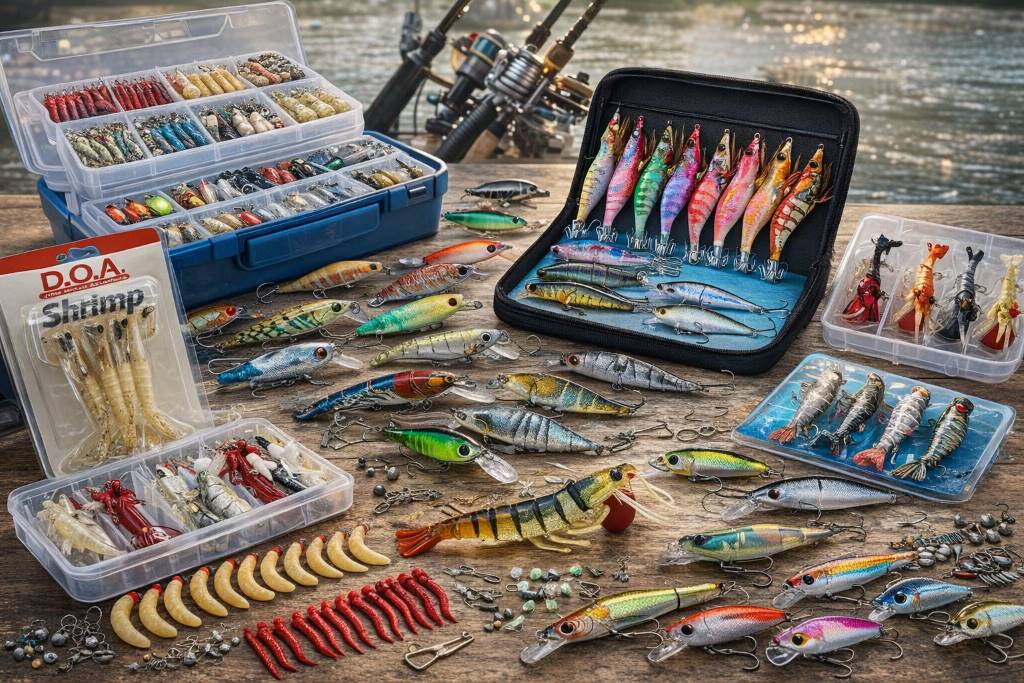
Shrimp remain one of the most reliable baits in both freshwater and saltwater fishing. According to the United States National Oceanic and Atmospheric Administration, shrimp make up a large portion of the natural diet for many coastal predatory fish. Research from several fisheries management agencies also shows that artificial lures that mimic natural prey movement can trigger more aggressive strikes than passive bait.
Artificial shrimp lures solve several problems anglers face with live bait. They stay usable for long periods, tolerate repeated strikes, and allow more precise control over depth and movement. Modern designs now replicate shrimp motion, color patterns, and vibration signals closely enough to fool experienced fish.
This guide looks closely at several proven best artificial shrimp lures that anglers consistently rely on. Each option offers a different approach to mimicking prey movement and attracting fish in real conditions.
A Quick Overview of The Best Artificial Shrimp Lures
These artificial shrimp lures cover different fishing environments and styles, from soft shrimp imitations to jointed swimbaits that simulate fleeing prey.
- TRUSCEND Easy Catch Pre Rigged Soft Fishing Lures
- Pristis Multi Jointed Swimbaits Fishing Lures
- TSKS Artificial Fishing Lures Accessories Kit
- XBLACK Assorted Crankbait Fishing Lures Kit
- VMSIXVM Soft Swimbaits Fishing Lures
- JSHANMEI Shrimp Artificial Cuttlefish Squid Baits
- DOA FSH3 3P 309 Shrimp Fishing Lures
Best Artificial Shrimp Lures of 2026
Artificial shrimp lures vary widely in how they imitate prey. Some replicate the exact shrimp profile, while others rely on swimming motion or vibration to trigger strikes. The following reviews explain how each lure behaves in real fishing conditions.
TRUSCEND Easy Catch Pre Rigged Soft Fishing Lures
Durable swimbait for aggressive strikes
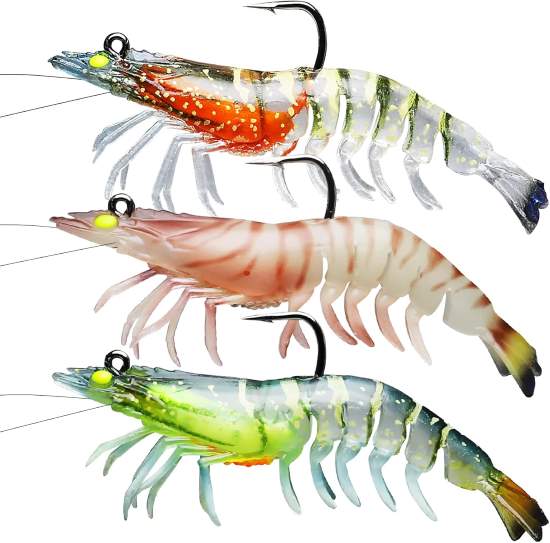
The TRUSCEND Easy Catch lure feels substantial in hand. It uses soft TPE material molded around a concealed hook system, which gives the lure a natural swimming motion when retrieved slowly. The body flexes easily in water, producing subtle tail movement that resembles a small shrimp or injured baitfish.
These lures come pre rigged, which simplifies setup for anglers who prefer quick casting without additional rigging. The weight distribution helps the lure sink gradually, allowing controlled retrieves across different depths.
In practice, the lure performs well in freshwater lakes and coastal flats where fish respond to slow moving prey. Bass, trout, and walleye tend to strike during slow retrieves near structure.
Maintenance requires rinsing after saltwater use because the soft body can trap residue around the hook cavity. The material also requires separate storage since TPE can react with certain plastics.
Anglers who prefer ultra lightweight finesse rigs may find the lure slightly heavier than expected.
User Review: Daniel R.
I started using this lure while fishing for bass near submerged grass beds. What stood out immediately was how stable it stayed during slow retrieves. It does not spin or twist like some soft plastics. After several trips the body still looks intact despite multiple strikes. I learned quickly that a slow steady retrieve works better than aggressive jerks.
Key Features
Material Quality: Soft TPE body provides realistic movement and resists tearing during repeated strikes.
Hook Integration: Concealed hook design reduces snagging while still maintaining strong hook exposure.
Swimming Action: Tail motion creates subtle vibrations that attract fish in murky water.
Weight Balance: Internal weight allows controlled sinking and stable retrieval.
Versatility: Works effectively in both freshwater lakes and coastal saltwater environments.
Storage Requirement: Needs separate storage from other soft plastics to avoid material reaction.
Target Species Range: Suitable for bass, crappie, trout, and walleye.
Pros and Cons
| Pros | Cons |
| Realistic swimming tail motion | Slightly heavier than finesse lures |
| Durable soft body material | Needs separate storage container |
| Pre rigged and ready | Limited ultra shallow use |
Pristis Multi Jointed Swimbaits Fishing Lures
Segmented lure with lifelike motion
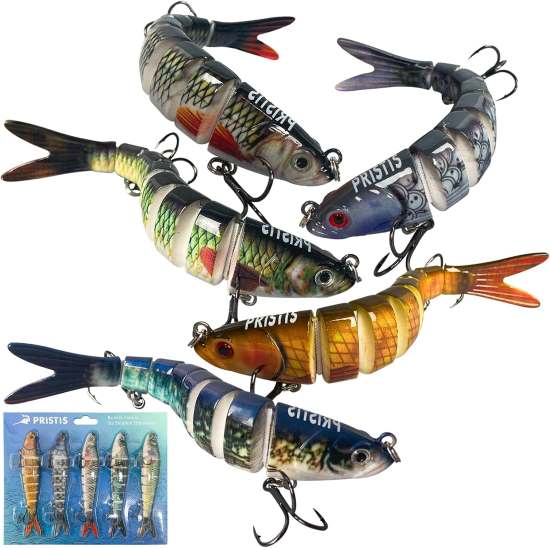
The Pristis multi jointed swimbait focuses heavily on motion realism. The body contains multiple articulated segments that create a side to side swimming pattern when retrieved.
In the water the lure moves with a gentle S shaped glide. This action closely resembles a small fish or shrimp attempting to escape predators. The slow sinking design works well when casting along rocky drop offs or weed lines.
Treble hooks provide strong hook sets but require careful handling when landing fish. These hooks increase the strike conversion rate but also increase snag risk around heavy vegetation.
This lure suits anglers who prefer casting and retrieving techniques rather than jigging. Its weight allows longer casting distances, which helps when covering large areas.
Rinsing after saltwater use prevents corrosion around the hook joints and segmented hinges.
User Review: Marcus L.
I usually fish reservoirs with lots of open water. The jointed body creates a natural glide that fish seem to notice from a distance. I caught several walleye using a slow retrieve near the bottom. The hooks are sharp but I switched one out after a few months because it showed slight rust from saltwater trips.
Key Features
Jointed Body Design: Multiple segments produce fluid swimming motion that mimics fleeing prey.
Hook Setup: Sharp treble hooks increase strike conversion when fish commit.
Casting Distance: Weighted body allows longer casts across open water.
Slow Sink Rate: Gradual descent helps maintain natural presentation.
Realistic Finish: Painted scale pattern adds visual attraction in clear water.
Durability: Solid internal frame resists bending under pressure.
Snag Consideration: Treble hooks require careful use near heavy cover.
Pros and Cons
| Pros | Cons |
| Very natural swimming action | Treble hooks snag vegetation |
| Long casting capability | Requires careful hook handling |
| Works in open water | Slightly bulky for finesse |
TSKS Artificial Fishing Lures Accessories Kit
Wide assortment for varied conditions

The TSKS lure kit provides a mixed collection of artificial bait styles including shrimp like lures, soft plastics, and metal components. This variety makes it useful for anglers who want multiple lure types in one setup.
In real fishing situations the kit allows quick experimentation with different presentations. Some lures work better for slow jigging, while others perform well during steady retrieves.
The build quality varies slightly across the included pieces. Most components hold up well under moderate use, though frequent saltwater exposure may require periodic hook replacement.
This kit suits beginners or anglers who fish in diverse environments where fish behavior changes frequently.
Because it includes many small components, keeping them organized in a tackle box helps prevent tangling.
User Review: Kevin S.
I bought this kit mainly for variety. Some of the soft lures look surprisingly realistic once in the water. I ended up using the shrimp style baits the most when fishing near docks. Not every piece in the box gets regular use, but having different options helped me figure out what works in different spots.
Key Features
Variety Pack: Includes multiple lure styles for experimenting with different fishing methods.
Material Mix: Combination of soft plastics and hard baits broadens presentation options.
Beginner Friendly: Suitable for anglers learning different lure techniques.
Compact Storage: Components fit easily in standard tackle organizers.
Hook Sharpness: Most hooks arrive adequately sharp for immediate use.
Versatility: Works across freshwater lakes and coastal fishing areas.
Quality Variation: Some components feel lighter than premium standalone lures.
Pros and Cons
| Pros | Cons |
| Large variety of lure styles | Quality varies across pieces |
| Good for experimenting techniques | Some hooks may need replacing |
| Useful starter fishing kit | Not specialized for one style |
XBLACK Assorted Crankbait Fishing Lures Kit
Crankbait set for active retrieval
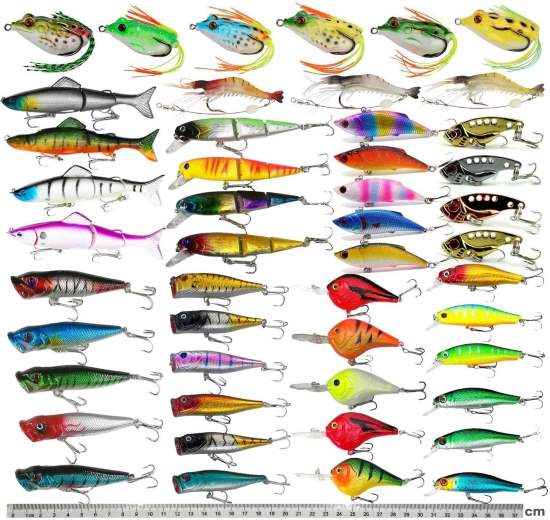
The XBLACK crankbait kit focuses on hard body lures designed for constant movement. Unlike shrimp replicas, these crankbaits trigger strikes through vibration and erratic swimming patterns.
Each lure contains internal weights that create a wobbling motion during retrieval. This vibration helps attract fish from longer distances, particularly in slightly murky water.
Anglers often use crankbaits when covering large areas quickly. The lures dive slightly during retrieval, making them effective around submerged rocks or mid depth structures.
Because crankbaits rely on steady motion, they work best with consistent reel speed rather than stop and go techniques.
Regularly checking the split rings and hooks helps maintain reliability after repeated strikes.
User Review: Ethan G.
I use crankbaits mainly when searching for active fish. These lures run consistently and produce a strong wobble. Bass in my local lake respond well when I retrieve them along rocky banks. They are not as subtle as shrimp lures but they cover water much faster.
Key Features
Vibration Action: Internal weights create strong wobble that attracts fish.
Hard Body Construction: Durable shell resists repeated strikes.
Depth Control: Diving lip helps maintain mid water presentation.
Color Variety: Multiple finishes improve visibility in different water conditions.
Casting Stability: Balanced design reduces spinning during casts.
Hook Setup: Treble hooks improve hook up rate.
Technique Focus: Performs best during steady retrieval methods.
Pros and Cons
| Pros | Cons |
| Strong vibration attracts fish | Less subtle than shrimp lures |
| Durable hard body design | Treble hooks snag cover |
| Good for covering water | Requires active retrieval |
VMSIXVM Soft Swimbaits Fishing Lures
Flexible bait for subtle presentation
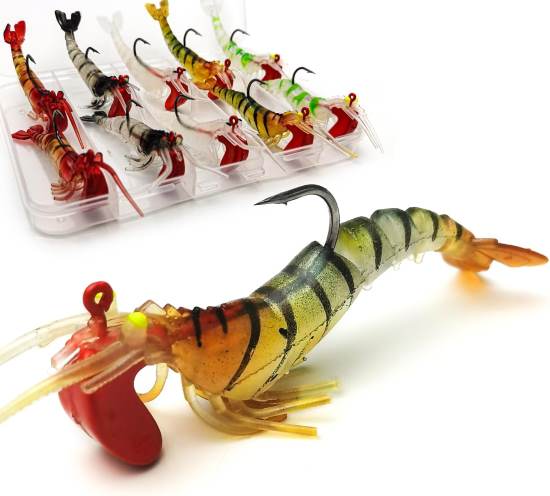
The VMSIXVM soft swimbaits emphasize natural movement rather than aggressive vibration. Their flexible body produces a gentle tail wave during slow retrieval.
This subtle motion works well when fish become cautious or when water conditions remain calm. The lure sinks slowly and maintains a steady swimming posture.
Because the body remains soft and compressible, fish often hold onto the lure longer before spitting it out. That extra moment improves hook set timing.
These swimbaits suit finesse fishing situations such as shallow flats or quiet lake edges.
Proper storage helps maintain the shape of the tail and body. Over time soft plastics can bend if packed tightly in small compartments.
User Review: Tyler H.
I started using these swimbaits when fish stopped hitting louder lures. The tail movement looks natural when retrieved slowly. I caught several trout along a shallow shoreline using very light jigging motions. The body still holds up well after several outings.
Key Features
Soft Body Construction: Flexible material produces lifelike tail movement.
Natural Swimming Motion: Works well with slow and steady retrieves.
Subtle Presentation: Ideal for cautious fish in calm water.
Lightweight Design: Suitable for finesse fishing setups.
Hook Compatibility: Works with several jig head styles.
Storage Care: Requires careful storage to maintain body shape.
Versatile Target Species: Effective for bass, trout, and walleye.
Pros and Cons
| Pros | Cons |
| Very natural tail movement | Soft body can deform |
| Works for finesse fishing | Requires careful storage |
| Good for calm water | Not ideal for heavy current |
JSHANMEI Shrimp Artificial Cuttlefish Squid Baits
Realistic saltwater shrimp imitation

The JSHANMEI shrimp lure focuses on visual realism. Its body shape closely resembles a shrimp with small leg structures and detailed color patterns.
In saltwater flats or shallow coastal areas this design looks convincing when retrieved slowly along the bottom. The lure works especially well for species that naturally hunt shrimp such as redfish or sea trout.
The hook placement allows solid hook sets without obstructing the natural profile of the lure.
Because the design emphasizes realism rather than vibration, anglers typically use gentle twitching motions instead of fast retrieval.
Saltwater rinsing remains essential to prevent corrosion.
User Review: Andrew M.
I fish mostly coastal flats and shrimp are everywhere in that environment. These lures look surprisingly realistic underwater. I noticed fish approaching cautiously before striking, which usually means the presentation appears natural enough.
Key Features
Realistic Shrimp Shape: Detailed body closely imitates natural shrimp.
Saltwater Compatibility: Materials tolerate coastal fishing conditions.
Subtle Motion Design: Best used with slow twitching retrieves.
Visual Detail: Natural color patterns increase realism.
Balanced Hook Placement: Maintains lure profile while improving hook sets.
Target Species: Works well for redfish, sea trout, and similar predators.
Maintenance Need: Requires rinsing after saltwater use.
Pros and Cons
| Pros | Cons |
| Highly realistic shrimp design | Less vibration attraction |
| Good for saltwater flats | Needs careful presentation |
| Effective for shrimp feeding fish | Limited deep water use |
DOA FSH3 3P 309 Shrimp Fishing Lures
Classic shrimp imitation design
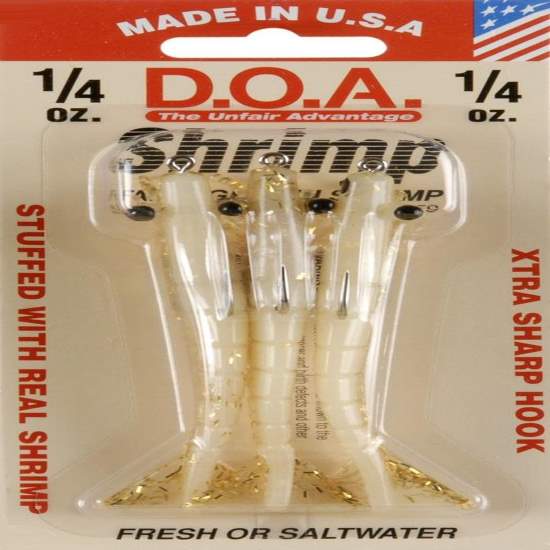
The DOA shrimp lure remains one of the more recognizable artificial shrimp designs. Its slim profile and internal weight allow it to sink naturally while maintaining a horizontal posture.
In practice the lure performs well with slow jigging or gentle twitching motions. The tail section produces subtle movement that resembles a shrimp darting away from predators.
Many anglers use this lure in shallow saltwater areas where shrimp frequently appear near grass beds or sand flats.
Because the lure remains relatively lightweight, it works best with medium spinning setups that allow accurate casting.
Regular hook inspection helps maintain reliability after multiple fish strikes.
User Review: Carlos P.
This shrimp lure has been in my tackle box for years. What I like most is how naturally it sinks. When I twitch it slightly the movement looks very close to a real shrimp escaping. It works best when I slow down my retrieve and let the lure settle between twitches.
Key Features
Natural Sink Behavior: Internal weight creates horizontal descent similar to real shrimp.
Realistic Profile: Slim body imitates natural shrimp size.
Twitch Retrieval Response: Responds well to gentle rod movements.
Lightweight Construction: Suitable for finesse saltwater setups.
Durable Body Material: Withstands repeated strikes.
Shallow Water Use: Performs best near grass beds and flats.
Hook Strength: Provides reliable hook sets during strikes.
Pros and Cons
| Pros | Cons |
| Natural shrimp sinking motion | Lightweight casting range |
| Proven design among anglers | Best for shallow water |
| Effective twitch presentation | Not ideal for deep fishing |
Buying Guide
Choosing artificial shrimp lures requires more than simply selecting something that looks like a shrimp. The way a lure moves, sinks, and interacts with water conditions determines whether fish recognize it as prey. The following guide explains the factors that influence long term satisfaction with fishing lures.
What Actually Matters Before Choosing
Core performance factors and how they affect real use
Movement remains the most important element in artificial bait performance. Fish often respond to motion patterns that resemble injured or fleeing prey. A lure that looks perfect but moves unnaturally rarely triggers strikes.
Many anglers focus too heavily on appearance when browsing lures. In real fishing conditions vibration, swimming rhythm, and sink rate influence fish behavior far more than color details.
A balanced lure should maintain stability during retrieval without spinning. Stability ensures that the lure maintains its intended swimming action instead of twisting the fishing line.
Material quality and long term durability
Lure materials determine how well the bait holds up after repeated strikes. Soft plastics offer realistic movement but can tear over time. Hard body lures resist damage but produce less flexible motion.
Many buyers assume soft materials wear out quickly. Modern TPE and reinforced plastics last significantly longer than older soft baits when stored properly.
Durability also depends on internal hook mounts and joint mechanisms. Weak connections often fail before the lure body itself.
Comfort or usability considerations
Ease of use influences how often anglers actually use a lure. Pre rigged lures simplify setup, while modular systems require more preparation.
Some anglers enjoy customizing rigs with different hooks and weights. Others prefer simple lures that work immediately after tying the line.
Usability also includes casting balance. A lure that casts smoothly allows anglers to target precise areas without constant adjustments.
Maintenance demands and long term ownership effort
Artificial lures require periodic maintenance to stay effective. Saltwater exposure can corrode hooks if left unwashed. Soft plastics may warp if stored tightly in tackle boxes.
Many buyers overlook maintenance until lures begin deteriorating. Simple habits such as rinsing after saltwater use and storing plastics separately extend the life of fishing gear considerably.
Understanding maintenance needs prevents unnecessary replacement purchases.
Environmental or situational compatibility
Different fishing environments require different lure behaviors. Calm lakes often favor subtle soft swimbaits that move gently through water.
Strong currents or deeper water often require heavier lures with stronger vibration patterns to remain visible to fish.
Matching lure design to water depth, clarity, and current conditions increases the chances of consistent performance.
Safety considerations where relevant
Hooks present the most obvious safety factor when handling fishing lures. Treble hooks improve strike conversion but increase the risk of accidental snags during casting or fish handling.
Anglers who frequently fish in dense vegetation or near rocks may prefer single hook designs that reduce snagging risk.
Choosing the right hook configuration improves both safety and efficiency during fishing sessions.
Common Buyer Mistakes
Many anglers assume that the most realistic looking lure automatically performs best. In reality movement and vibration often influence fish behavior more strongly than visual detail.
Another common mistake involves ignoring water conditions. A lure designed for calm shallow water may perform poorly in deeper or fast moving environments.
Some buyers choose large multi hook lures without considering snag risk. These lures can become frustrating when fishing near heavy cover.
Another frequent issue is mixing incompatible soft plastics in storage containers. Certain materials react chemically when stored together, causing deformation.
Many beginners also retrieve shrimp style lures too quickly. Shrimp naturally move in short bursts followed by pauses, so constant fast retrieval reduces realism.
A final mistake involves neglecting hook maintenance. Even high quality hooks dull gradually after repeated strikes or contact with rocks.
How to Match Products to Specific Needs
Casual anglers who fish occasionally often benefit from versatile lure kits. Mixed lure collections allow experimentation without requiring multiple specialized purchases.
Frequent anglers usually prefer specialized lures tailored to specific environments. For example, shrimp style soft plastics work well for shallow saltwater fishing, while crankbaits perform better when covering large freshwater areas.
Portable setups become important for anglers who travel frequently. Lightweight soft swimbaits and compact tackle kits simplify transportation while maintaining flexibility.
Budget conscious anglers should prioritize durability over large quantities of lures. A few well constructed lures often outlast large inexpensive assortments.
Advanced anglers often select lures based on seasonal fish behavior. During colder periods slower moving soft baits often outperform aggressive vibration lures.
Matching lure characteristics to fishing style, environment, and experience level leads to more consistent results over time.
Discover Also:
How to Choose Lightweight Small Fishing Nets for Kayak Anglers
Affordable & Best Fishing Lines for 2026: Which Line Anglers Trust for Power and Precision?
Conclusion
Artificial shrimp lures have evolved into highly effective alternatives to live bait. Modern materials, improved weight distribution, and realistic movement allow anglers to present convincing prey without relying on fragile natural bait.
Each lure type serves a different role. Soft swimbaits emphasize subtle movement, jointed swimbaits produce lifelike swimming motion, and crankbaits attract fish through vibration and coverage.
The most effective choice depends on fishing conditions, target species, and preferred techniques. By focusing on movement, durability, and environmental compatibility, anglers can select lures that remain reliable across many fishing trips.
Choosing carefully ensures that artificial shrimp lures become dependable tools rather than occasional experiments.
FAQs
Do artificial shrimp lures really work better than live bait?
They often trigger more aggressive strikes because anglers control their movement and depth.
When should anglers use shrimp style lures?
They work best in shallow coastal areas or anywhere fish commonly feed on shrimp.
Are soft swimbaits durable enough for frequent fishing?
Modern materials can handle repeated strikes when stored and maintained properly.
How should artificial shrimp lures be retrieved?
Short twitches with pauses usually imitate natural shrimp movement effectively.
Do color patterns matter when choosing fishing lures?
Color helps in clear water, but movement usually influences fish more strongly.