Nina Taylor
Fishing tackle requires regular maintenance to perform well and last longer. However, you don’t need expensive specialty products to keep your gear in top condition. Many effective cleaning solutions are already sitting in your kitchen cabinets and bathroom shelves. This guide explores the best household items for cleaning fishing tackle and how to use them properly.
Why Clean Your Fishing Tackle Regularly
Dirt, salt, and grime build up on fishing equipment over time. This accumulation can cause rust, corrosion, and mechanical failures. Regular cleaning extends the life of your tackle and ensures everything works smoothly when you need it most. Additionally, clean gear performs better and looks more professional.
Saltwater is particularly harsh on fishing equipment. It accelerates corrosion and damages sensitive components. Therefore, anglers who fish in saltwater environments should clean their tackle after every outing. Freshwater anglers can clean less frequently, but regular maintenance remains important.
Dish Soap and Warm Water
The simplest and most effective cleaning solution is dish soap mixed with warm water. This combination removes most dirt, grime, and light salt deposits from fishing tackle. Dish soap cuts through grease and oils without damaging delicate components.
To use this method, fill a bucket with warm water and add a few drops of dish soap. Submerge your lures, hooks, and other tackle items for fifteen to twenty minutes. Then, use a soft brush to scrub away stubborn debris. Rinse everything thoroughly with clean water and dry completely before storing.
This method works exceptionally well for cleaning hard plastic lures, metal spoons, and spinner baits. However, avoid soaking wooden lures for extended periods, as water can damage the wood and paint finishes.
White Vinegar for Rust and Corrosion
White vinegar is a powerful household cleaner that removes rust and corrosion from metal fishing tackle. The acetic acid in vinegar dissolves rust without harsh chemicals. This makes it perfect for cleaning hooks, swivels, and metal lures.
Create a cleaning solution by mixing equal parts white vinegar and water. Soak rusty items for one to two hours, depending on the severity of the corrosion. For heavily rusted pieces, you can use undiluted vinegar. After soaking, scrub the items with a wire brush or steel wool to remove loosened rust.
Rinse the cleaned items thoroughly with water to remove all vinegar residue. Then, dry them completely and apply a light coating of oil to prevent future rust. This simple treatment can restore old tackle to near-new condition.
Baking Soda as a Gentle Abrasive
Baking soda serves as an excellent gentle abrasive for cleaning fishing tackle. It removes stubborn grime without scratching delicate surfaces. Furthermore, baking soda neutralizes odors and helps eliminate fishy smells from tackle boxes and gear.
Make a cleaning paste by mixing baking soda with a small amount of water. Apply this paste to dirty lures, reels, or tackle boxes using a soft cloth or toothbrush. Gently scrub in circular motions to lift away dirt and stains. Rinse with clean water and dry thoroughly.
For tackle boxes with persistent odors, sprinkle baking soda inside and let it sit overnight. The baking soda absorbs unpleasant smells naturally. Simply vacuum or wipe out the powder the next day for a fresh-smelling storage solution.
Toothbrushes for Detailed Cleaning
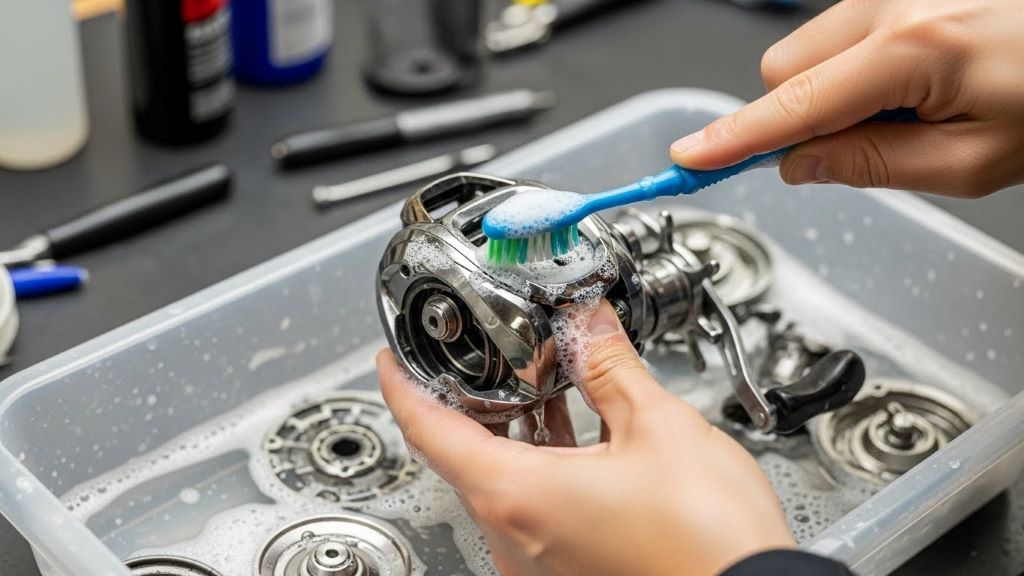
Old toothbrushes are indispensable tools for cleaning fishing tackle. Their small bristles reach into tight spaces and crevices where dirt accumulates. Soft-bristled toothbrushes work best for delicate items, while medium bristles handle tougher cleaning jobs.
Use toothbrushes to clean reel mechanisms, lure joints, and hook eyes. They excel at removing algae, sand, and debris from hard-to-reach areas. Keep several old toothbrushes in your tackle maintenance kit for different cleaning tasks.
Additionally, toothbrushes work perfectly when combined with other cleaning solutions mentioned in this article. The bristles help distribute soap, vinegar, or baking soda paste evenly across surfaces for more effective cleaning.
Cotton Swabs for Precision Work
Cotton swabs provide precision cleaning for small fishing tackle components. They reach into tiny spaces that even toothbrushes cannot access. This makes them ideal for cleaning reel bearings, line guides, and small mechanical parts.
Dip cotton swabs in your chosen cleaning solution and carefully clean intricate areas. The cotton absorbs dirt and grime while the swab’s shape allows for precise application. Replace swabs frequently as they become dirty to avoid redistributing grime.
Cotton swabs also work well for applying lubricants and oils to specific points on reels and other mechanical tackle. This precision prevents over-lubrication and keeps your gear functioning smoothly.
Rubbing Alcohol for Quick Cleaning
Rubbing alcohol, also known as isopropyl alcohol, offers fast-drying cleaning power for fishing tackle. It evaporates quickly, leaving no residue behind. This makes it perfect for cleaning items that need immediate use or storage.
Apply rubbing alcohol to a clean cloth and wipe down lures, hooks, and reel surfaces. The alcohol removes oils, fingerprints, and light grime effectively. Moreover, it helps prevent corrosion by displacing water from metal surfaces, according to Popular Mechanics, which frequently covers maintenance techniques for various equipment.
Rubbing alcohol also disinfects fishing tackle, eliminating bacteria and unpleasant odors. This is particularly useful for tackle that has contacted fish or sat in damp conditions for extended periods.
Lemon Juice for Natural Cleaning
Lemon juice provides natural cleaning and deodorizing properties for fishing tackle. Its citric acid content helps break down grime and neutralize fishy odors. Additionally, lemon juice leaves a fresh, clean scent on your gear.
Mix fresh lemon juice with warm water in equal parts for a gentle cleaning solution. This mixture works well for cleaning tackle boxes, rod handles, and soft plastic lures. The natural acidity cuts through grease without harsh chemicals.
For tougher jobs, apply undiluted lemon juice directly to stained or dirty areas. Let it sit for several minutes before scrubbing and rinsing. The natural bleaching properties of lemon juice can also help restore faded colors on certain lures.
Newspaper for Drying and Polishing
Newspapers serve multiple purposes in tackle maintenance. They absorb moisture quickly and polish metal surfaces to a shine. After cleaning your fishing tackle, lay items on newspaper to dry naturally.
The absorbent paper draws water away from metal components, reducing the risk of rust formation. Furthermore, crumpled newspaper can polish metal lures and hooks to a brilliant finish. Simply rub the metal gently with newspaper to remove water spots and restore shine.
Newspapers also provide protective wrapping for storing delicate lures and preventing them from tangling. This dual-purpose household item deserves a place in every angler’s maintenance routine.
Rice for Drying Wet Reels
Uncooked rice effectively dries fishing reels and other tackle that have gotten wet. Rice absorbs moisture from hard-to-reach internal components. This household staple can save expensive reels from water damage.
If your reel gets submerged or exposed to heavy moisture, place it in a container filled with uncooked rice. Bury the reel completely and leave it for twenty-four to forty-eight hours. The rice draws moisture out of bearings, gears, and other internal parts.
However, rice is a temporary solution for emergency situations. For thoroughly wet reels, disassemble and clean them properly with the methods described above. Then, apply appropriate lubricants before returning to service.
Hair Dryer for Quick Drying
A hair dryer provides controlled heat for drying fishing tackle quickly. After cleaning, use the cool or low heat setting to blow dry lures, hooks, and reel exteriors. This prevents water spots and accelerates the drying process.
Keep the hair dryer moving constantly to avoid overheating plastic lures or melting paint finishes. The airflow reaches into crevices and joints where water tends to collect. This thorough drying prevents rust and corrosion from forming overnight.
A hair dryer is particularly useful when you need to clean and store tackle quickly between fishing trips. It ensures everything is completely dry before going into storage containers.
Creating a Maintenance Schedule
Establishing a regular cleaning schedule keeps your fishing tackle in optimal condition. Clean saltwater tackle after every use without exception. Freshwater tackle benefits from cleaning every three to five outings or monthly during active fishing seasons.
Perform deep cleaning sessions quarterly, where you disassemble reels, inspect all components, and thoroughly clean everything. This preventive maintenance catches small problems before they become expensive repairs. Therefore, setting reminders helps maintain consistency in your tackle care routine.
Keep a tackle maintenance log noting when you cleaned each piece of equipment. This record helps track usage patterns and identify items needing replacement or repair.
Conclusion
Cleaning fishing tackle doesn’t require expensive specialty products. Common household items like dish soap, white vinegar, baking soda, and toothbrushes handle most cleaning tasks effectively. Regular maintenance using these simple solutions extends the life of your gear and improves fishing performance. By establishing a consistent cleaning routine with readily available household products, you protect your investment and ensure your tackle stays ready for your next fishing adventure.
Frequently Asked Questions
How often should I clean my fishing tackle?
Clean saltwater fishing tackle after every use. Freshwater tackle needs cleaning every three to five outings or at least once monthly during active seasons. Deep clean all tackle quarterly regardless of usage frequency.
Can I use household cleaners on fishing reels?
Yes, mild dish soap and warm water work well for reel exteriors. Avoid harsh chemicals near internal mechanisms. Use rubbing alcohol for quick cleaning and white vinegar for removing corrosion from metal parts.
Will vinegar damage my fishing hooks?
White vinegar removes rust without damaging hooks when used properly. Soak hooks for one to two hours maximum, then rinse thoroughly and dry completely. Apply a light oil coating afterward to prevent future corrosion.
What is the best way to remove fishy smells from tackle boxes?
Sprinkle baking soda inside the tackle box and let it sit overnight to absorb odors. Wipe out the powder the next day. For persistent smells, wash the box with dish soap and water, then treat with baking soda.
Can I use these cleaning methods on all types of lures?
Most methods work on hard plastic and metal lures. Use caution with wooden lures, limiting water exposure to prevent damage. Soft plastic lures clean well with dish soap and water but avoid prolonged soaking in vinegar or harsh solutions.
Related Topics:
Best Spoons for Ice Fishing in Canada This Winter
Top-Selling Fishing Spoons in Canadian Tackle Shops: Must-Have Lures for Every Angler