Nina Taylor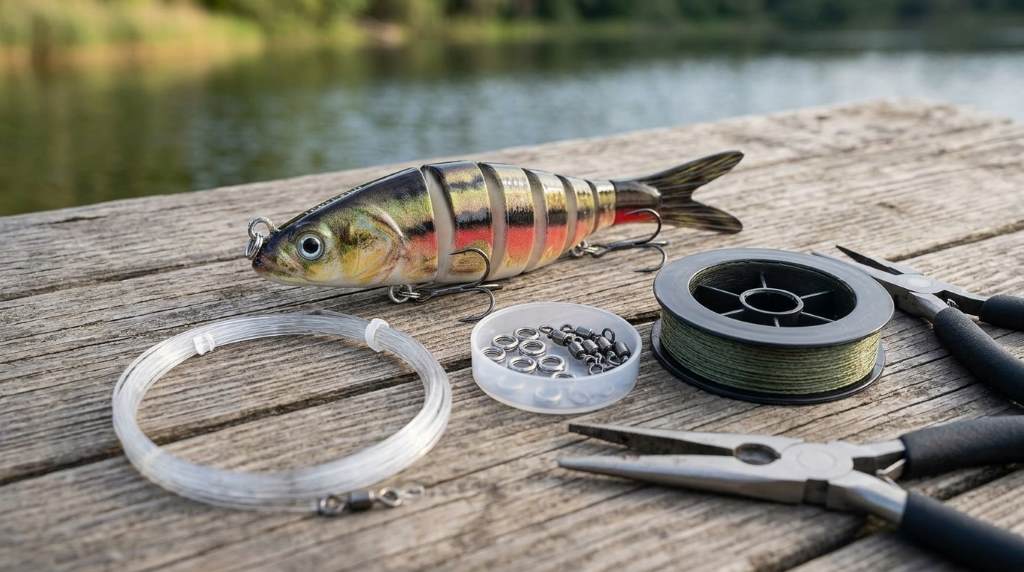
Rigging Truscend Swimmax Easy Catch fishing lures starts with the right line, knot, and connection point. The lure uses eight jointed segments, sharp BKK hooks, and built in rattles for lifelike movement. You can connect it directly with a strong snap, split ring, or suitable knot depending on your setup. This simple approach lets the lure move naturally while protecting your line during repeated casts.
These Truscend swimmax easy catch fishing lures work best when you preserve their natural movement. Truscend currently lists multiple Swimmax sizes, including 4 inch, 5.4 inch, and 5.5 inch versions. The lure also combines wiggling, vibration, gurgling, and rattling actions during a steady retrieve.
Understand the Swimmax Lure Before Rigging
First, examine the lure carefully before attaching it to your fishing line. The segmented body needs freedom to flex because that movement creates much of its attraction. Therefore, avoid connections that restrict the nose or force the lure into an unnatural position.
The Swimmax uses a multi segment body connected with heavy duty Dyneema fiber. This joint construction allows the sections to move independently during retrieval. In addition, internal rattles create sound while the body produces vibration and water movement.
The lure also comes equipped with BKK hooks on applicable Swimmax versions. Therefore, you usually do not need to replace the hooks before your first fishing trip. However, always inspect hook points, split rings, and attachment hardware before casting.
Choose the Right Line for Swimmax
Your fishing line affects casting distance, lure action, and hook setting performance. Consequently, match your line strength with the lure size and target species. Medium power equipment generally suits many freshwater applications, while heavier setups can handle larger predators.
Braided line offers excellent sensitivity and casting distance for many anglers. However, fluorocarbon can provide better abrasion resistance around rocks, wood, and other underwater cover. Monofilament also works when you want more stretch and a simpler setup.
Consider these basic combinations before rigging:
- Use braided main line for sensitivity and long casts.
- Add a fluorocarbon leader around rocks or heavy cover.
- Use monofilament when you prefer extra line stretch.
- Match leader strength with the target fish and cover.
Use a Snap for Fast Lure Changes
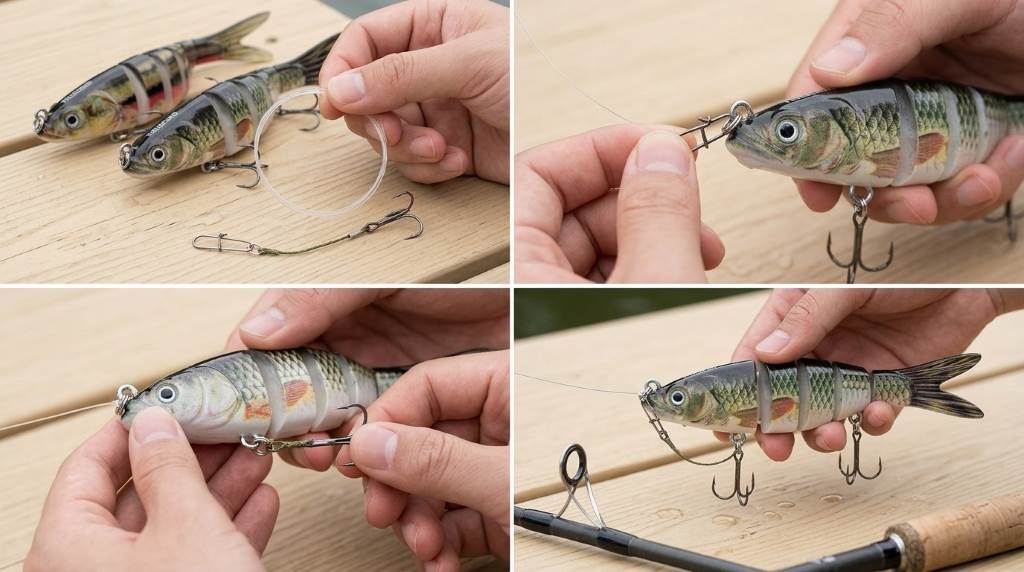
A quality snap provides one of the easiest ways to rig a Swimmax lure. First, attach the snap to the lure connection point. Then connect your main line or leader using a reliable fishing knot.
This method works well when you frequently change lure colors or sizes. It also reduces the need to retie your entire leader after every lure change. However, use a compact snap that does not overpower the lure or interfere with its swimming action.
How to Attach a Snap
Open the snap and connect it through the lure’s front attachment point. Next, close the snap completely and inspect the connection before casting. Pull the lure gently to confirm that the snap remains locked.
Keep the snap aligned with the lure’s nose. A crooked connection can affect swimming movement and cause unwanted rotation. Therefore, replace any snap that shows bending, corrosion, or damage.
Rig Swimmax With a Direct Knot
A direct knot creates a clean connection between your leader and lure. Many anglers prefer this approach when they want fewer components between the rod and lure. It can also preserve a more natural connection at the lure’s front eye.
Start by passing your leader through the lure attachment point. Then tie a strong knot suited to your line material. Finally, tighten the knot gradually and trim the tag end neatly.
Always wet fluorocarbon before tightening the knot. This step reduces friction and helps the knot seat properly. Afterward, pull firmly against the lure to test the connection before making your first cast.
Check the Knot Before Every Trip
Small abrasions can weaken a leader without obvious visual damage. Therefore, run your fingers along the final section near the lure. Replace the leader when you feel roughness, cuts, or significant wear.
Also inspect the knot after catching a large fish. Strong runs can stress both the knot and connection point. A quick inspection can prevent losing another lure on the next cast.
Use the Correct Connection Point
The front attachment point controls how the Swimmax tracks through the water. Therefore, always connect your line to the designated nose connection. Avoid attaching line around the segmented body, hooks, or flexible joints.
The jointed design needs room to move during retrieval. A poorly positioned connection can limit that movement and reduce the lure’s natural swimming action. Consequently, keep your terminal connection compact and properly aligned.
Set the Lure Before Your First Cast
Never assume a newly rigged lure runs correctly without checking it. Instead, make a short cast near shore or beside the boat. Watch the lure closely while retrieving it at a slow and steady speed.
A properly connected Swimmax should move naturally through the water. The segmented body should flex instead of dragging rigidly behind the line. If the lure rolls excessively, inspect the snap, knot, and attachment point.
Next, test several retrieve speeds before making longer casts. Start slowly, then increase the speed gradually. This simple test shows which retrieve produces the most convincing movement in current conditions.
Match the Rig to Fishing Conditions
Water clarity, depth, cover, and fish activity should influence your rigging approach. Clear water often rewards natural movement and subtle presentations. Murky water can favor the Swimmax’s vibration and internal rattling sounds.
When fishing around rocks, use a stronger leader with good abrasion resistance. Around vegetation, keep your casts controlled and avoid unnecessary contact with thick cover. In open water, prioritize casting distance and a natural retrieve.
For Clear Water
Use a thinner leader when water clarity makes fish cautious. Keep the connection small and avoid oversized snaps. Then retrieve steadily while watching how fish respond to the lure.
For Murky Water
Murky conditions can make sound and vibration more valuable. The Swimmax already produces several attraction signals during retrieval. Therefore, start with a steady retrieve before adding aggressive movements.
For Rocky Cover
Rocky areas can quickly damage lighter leaders. Use a suitable fluorocarbon leader and inspect it frequently during the session. Also keep the lure moving above the roughest sections when possible.
Use a Steady Retrieve First
The Swimmax does not require complicated movements to create action. Its segmented body produces movement when you retrieve the lure steadily. Therefore, beginners should start with a consistent retrieve before experimenting with advanced techniques.
Cast beyond the area where you expect fish to hold. Allow the lure to reach the desired depth when conditions permit. Then begin a steady retrieve that keeps the lure moving naturally through the strike zone.
After several casts, change your retrieve speed slightly. Try slow, moderate, and faster presentations while maintaining control. This approach helps identify the speed that triggers the strongest response.
Add Pauses and Direction Changes
Once you establish a reliable steady retrieve, add controlled pauses. A short pause can make the lure change direction or lose forward momentum. Predatory fish may react when the baitfish imitation suddenly changes behavior.
You can also add small rod movements during the retrieve. Keep these movements controlled rather than aggressive. The segmented body already supplies substantial movement without excessive rod action.
Try this simple sequence when fish follow without striking:
- Cast beyond the target area.
- Retrieve steadily for several seconds.
- Pause briefly without creating slack.
- Resume with a slightly different speed.
- Repeat the pattern near productive structure.
Adjust Your Rig When the Lure Runs Poorly
A poorly running lure does not always mean the lure has failed. Often, the connection or terminal tackle creates the problem. Therefore, inspect every component before changing your entire presentation.
Start by checking the knot or snap. Next, examine the lure’s front connection point for damage. Finally, confirm that no debris, weeds, or fishing line has become trapped around the joints.
If the lure still behaves incorrectly, test another connection method. A direct knot may work better than a bulky snap in some situations. Likewise, a different leader diameter can change how freely the lure moves.
Keep the Hooks and Joints Ready
Sharp hooks improve your chances of converting strikes into landed fish. Therefore, inspect the hook points before every fishing session. Replace damaged hooks or hardware when necessary.
The flexible joints also deserve regular inspection. Look for damaged fibers, cracks, loose components, or unusual stiffness. Since the lure relies on segmented movement, joint damage can affect its action.
After fishing, rinse the lure with clean water when saltwater exposure occurs. Dry it thoroughly before placing it inside a tackle box. This routine helps protect hooks and metal components from corrosion.
Common Swimmax Rigging Mistakes
Several simple mistakes can reduce the lure’s performance. Fortunately, most problems require only small adjustments. Focus on connection quality, free movement, and appropriate tackle.
- Using an oversized snap that restricts movement.
- Tying a poorly seated knot near the lure.
- Ignoring abrasion near the terminal connection.
- Blocking the lure’s attachment point with debris.
- Retrieving too aggressively before testing slower speeds.
- Failing to inspect hooks after repeated contact.
- Storing a wet lure inside a closed tackle box.
Best Rigging Routine for Beginners
Beginners can simplify the entire process with one repeatable routine. First, inspect the lure and confirm that every joint moves freely. Then attach a suitable leader using either a compact snap or reliable direct knot.
Next, test the lure close to shore before making long casts. Watch the body movement and adjust your retrieve speed as needed. Once the lure tracks correctly, begin fishing the most productive water available.
After several casts, inspect the leader and connection again. Repeat that check whenever you catch a strong fish or contact heavy cover. This routine reduces preventable tackle failures throughout the fishing session.
When to Replace the Rig
Replace the terminal connection whenever you notice significant abrasion or deformation. Do not wait until the line fails during a strike. Prevention costs far less than losing a proven lure.
Also replace damaged snaps, worn split rings, or compromised hooks. Sharp hooks should maintain a reliable point without excessive bending. If a component looks questionable, replace it before continuing.
Final Tips for Better Swimmax Results
Rigging the Swimmax correctly gives its segmented design room to work. However, proper rigging alone does not guarantee fish because conditions and fish behavior constantly change. Therefore, combine a clean connection with thoughtful casting, depth control, and retrieve adjustments.
Start simple and let the lure’s built in action do most of the work. Then experiment with pauses, speed changes, and different water depths. Most importantly, inspect your connection regularly and keep the lure’s joints moving freely.
The best next step is to rig your Swimmax with a compact connection and test its action close to shore. Once you confirm natural movement, cast toward productive structure and vary your retrieve until fish respond.
Frequently Asked Questions
Do you need a leader with a Swimmax lure?
A leader is not mandatory, but fluorocarbon can provide useful abrasion resistance around rocks and cover.
Can you use a snap with the Swimmax?
Yes, a compact quality snap can provide a convenient connection while allowing natural lure movement.
What retrieve works best with Swimmax?
Start with a steady retrieve because the segmented body creates swimming action without complicated rod movements.
Should you replace the included hooks?
Not necessarily, because applicable Swimmax versions already use sharp BKK hooks, but inspect them before fishing.
Can Swimmax work in saltwater?
Yes, Truscend lists Swimmax models for both freshwater and saltwater use, but rinse the lure after saltwater fishing.