Nina Taylor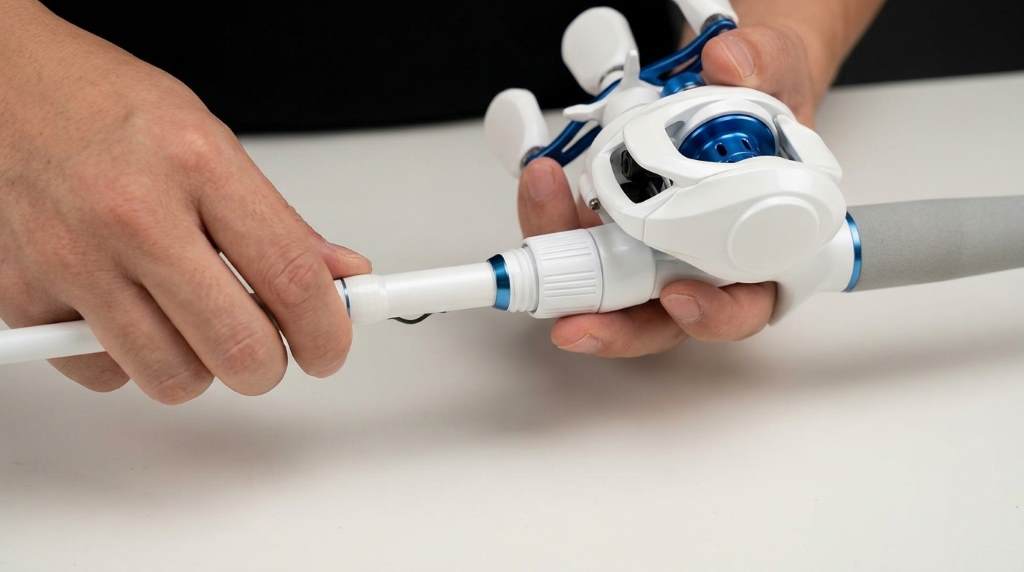
To use a KastKing Centron Lite, assemble the rod, mount the reel, spool line, and set the drag. Then thread the line, tie your lure, open the bail, cast smoothly, and retrieve with steady control.
The KastKing Centron Lite Fishing Rod Reel uses lightweight graphite construction for responsive fishing. Spinning models use a 5.2:1 gear ratio and 9+1 bearings for smooth retrieves.
The Centron Lite lineup includes spinning reels from compact to larger sizes for different applications. Therefore, checking your exact rod power and reel size before rigging prevents common setup mistakes.
Key Takeaways
- Align every rod guide before tightening the reel into its seat.
- Match fishing line strength with the ratings printed on your specific rod.
- Fill the spinning spool evenly without packing line against the spool lip.
- Set drag before fishing, then adjust it gradually while fighting fish.
- Use smooth casting motions instead of forcing the rod for extra distance.
- Rinse and dry the equipment after exposure to dirty or salty water.
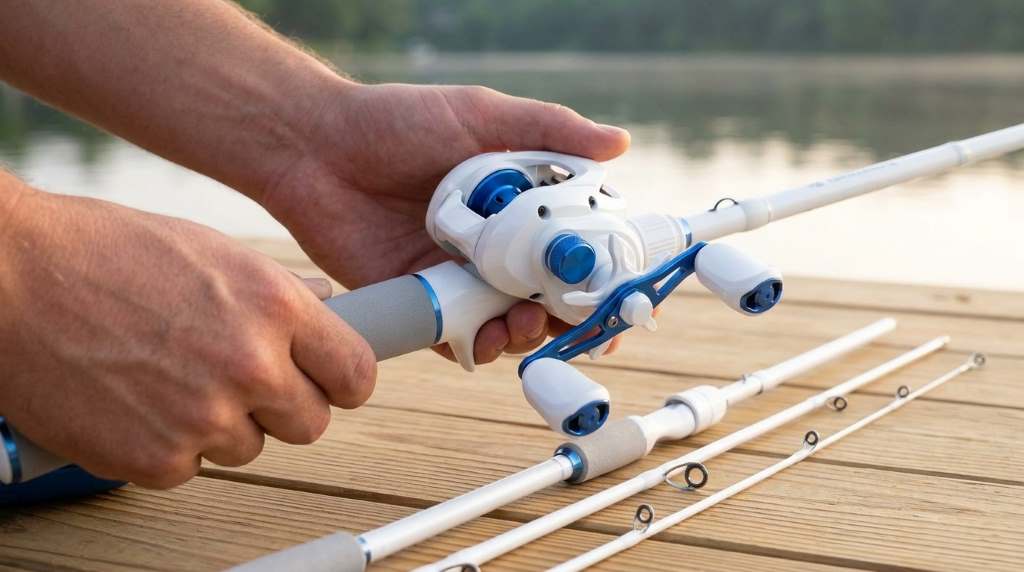
Know Your Centron Lite Before Setting It Up
KastKing sells Centron Lite combinations in spinning and baitcasting configurations. However, their controls and casting procedures differ significantly.
This guide focuses primarily on the Centron Lite spinning combination. Later, a separate section explains the important differences for Centron Lite baitcasting equipment.
Understand the Spinning Combo Components
The spinning rod uses an IM6 graphite blank and stainless steel guides with ceramic inserts. EVA handles provide a secure grip while keeping overall weight manageable.
The matched spinning reel uses an aluminum spool and an anti twist line roller. Its triple disc felt drag manages pressure when fish pull against your line.
Reel sizes commonly range from 2000 through 4000 on standard combinations. Meanwhile, rod lengths and powers vary according to the selected configuration.
Check Your Rod Specifications First
Look directly above the rod handle for printed specifications. Manufacturers normally identify rod power, action, recommended line, and lure ranges there.
Those ratings matter because different Centron Lite configurations serve different fishing situations. Therefore, avoid treating every Centron Lite combination as identical.
Assemble the Two Piece Rod Correctly
Start by placing both rod sections on a clean surface. Inspect the connection points for sand, dirt, cracks, or other damage.
Next, insert the upper section firmly into the lower section. Apply gentle pressure while making a small twisting movement.
Finally, sight down the rod and align every guide. Misaligned guides can affect line travel and make casting feel awkward.
Secure the Reel Without Overtightening
Loosen the reel seat until the reel foot fits comfortably. Then position the reel foot completely inside both retaining sections.
Tighten the locking section until the reel stops moving. However, excessive force can unnecessarily stress the reel seat components.
Grip the handle and gently move the reel sideways. A properly mounted reel should remain firmly seated without noticeable movement.
Spool the Fishing Line for Reliable Casting
Correct spooling improves casting distance and reduces frustrating line problems. Conversely, loose or twisted line encourages loops, knots, and wind tangles.
First, check the rod rating and reel capacity markings. Select suitable monofilament, fluorocarbon, or braided line for your intended fishing method.
Load Monofilament or Fluorocarbon
Open the reel bail before attaching new line to the spool. Then secure the line around the spool using a dependable arbor knot.
Close the bail and apply light tension with your fingers. Slowly turn the handle while keeping the incoming line consistently tensioned.
Watch the spool as line builds from side to side. Stop before the line reaches the spool’s outer edge.
Load Braided Line Carefully
Braid can slip around a smooth spool when improperly anchored. Therefore, use appropriate backing or another secure method suitable for your spool.
Keep steady pressure on braid throughout the loading process. Loose braid can dig into lower layers when a fish applies heavy pressure.
Additionally, avoid excessive spool filling because braid can create difficult wind knots. Leave a small, visible margin below the spool lip.
Thread the Rod and Attach Your Rig
Place the rod securely before threading the line. Open the bail so line leaves the spool freely during this process.
Start with the guide closest to the reel. Then pass the line through every guide until it exits the rod tip.
Check each guide afterward because skipping one changes rod loading. More importantly, accidentally wrapping line around the blank can cause damage.
Tie the Lure or Terminal Tackle
Select a lure within your rod’s printed lure rating. Next, use a proven fishing knot appropriate for your chosen line.
A Palomar knot works well with many applications, especially braided line. An improved clinch knot also suits many monofilament fishing situations.
After tightening the knot, inspect it before casting. A poorly seated knot can fail even when your line remains perfectly intact.
Set the Drag Before Your First Cast
The drag controls how much pressure releases line from the spool. Correct adjustment protects your line while helping tire a strong fish.
Turn the drag knob clockwise to increase resistance. Conversely, turn it counterclockwise when you need less resistance.
Pull line steadily from the reel to test resistance. The spool should release line smoothly rather than sticking and suddenly jumping.
Use Line Strength as Your Starting Point
A practical starting point uses roughly one quarter of the line’s breaking strength. However, knots, line condition, cover, and tackle affect actual requirements.
For greater accuracy, attach the line to a handheld scale. Pull steadily while adjusting the drag until you reach your target resistance.
Avoid locking the drag completely during normal fishing. Otherwise, sudden fish movements can break line or overload other tackle components.
Cast the Centron Lite Spinning Combo Smoothly
Hold the rod comfortably with your index finger near the reel stem. Then hook the fishing line lightly against your finger.
Open the bail while maintaining finger pressure on the line. Keep the lure hanging a comfortable distance beneath the rod tip.
Bring the rod backward smoothly and accelerate forward. Release your finger from the line as the rod points toward your target.
Let the Rod Create Casting Distance
Many beginners swing harder when they want longer casts. However, excessive force often reduces accuracy and makes line management harder.
Instead, allow the graphite blank to load under the lure’s weight. Then use smooth acceleration to transfer that stored energy forward.
Practice with moderate casts before attempting maximum distance. Consistent timing eventually produces better distance with considerably less effort.
Close the Bail and Begin Your Retrieve
After the lure lands, close the bail manually whenever practical. This habit gives you immediate control over the fishing line.
Next, remove visible slack before starting your retrieve. Maintain enough tension to feel lure movement and detect strikes clearly.
Turn the handle steadily for basic presentations. Alternatively, vary speed and add pauses when your lure requires a different action.
Match Retrieval Style With Your Lure
| Lure Type | Basic Retrieve | Useful Adjustment |
| Spinner | Steady retrieve | Change speed occasionally |
| Crankbait | Consistent retrieve | Add short pauses |
| Soft plastic | Slow retrieve | Add small lifts |
| Jig | Controlled movement | Lift and pause |
| Topwater lure | Moderate retrieve | Add rhythmic pauses |
These methods provide useful starting points rather than fixed rules. Water temperature, depth, structure, and fish behavior should guide later adjustments.
Fight Fish Without Overloading the Rod
When a fish strikes, maintain controlled pressure while keeping the line tight. Avoid aggressive hooksets unless your lure and technique require them.
Let the rod bend and absorb sudden movements. Meanwhile, allow the drag to release line when the fish makes powerful runs.
Reel when the fish stops taking line. Avoid turning the handle aggressively while the drag actively releases line.
Use the Rod Angle Wisely
Keep a moderate bend in the rod during the fight. Avoid pointing the rod directly toward the fish for extended periods.
Likewise, avoid pulling the rod excessively backward. Extreme angles can place unnecessary stress near the thinner tip section.
Instead, combine steady rod pressure with controlled reeling. This approach uses both the rod and drag as intended.
Avoid Common Centron Lite Setup Mistakes
Several simple errors can make a correctly functioning combination feel difficult. Fortunately, most problems require adjustment rather than replacement parts.
- Do not install more line than the spool can manage cleanly.
- Do not fish with loose loops buried beneath tightly wound line.
- Do not exceed the lure range printed on your rod blank.
- Do not tighten the drag completely before every fishing session.
- Do not retrieve against a fish while the drag continuously slips.
- Do not ignore damaged ceramic guide inserts or rough spool edges.
Inspecting these areas solves many apparent performance problems quickly. Furthermore, regular checks help prevent damaged line and lost fish later.
Fix Line Twist, Loops, and Poor Casting
Line twist commonly appears as coils, loops, or unwanted knots. Improper spooling and repeated lure rotation can increase this problem.
First, remove damaged sections and inspect your remaining line. Then respool under steady tension if the line sits loosely or unevenly.
A swivel can help when a presentation naturally twists line. However, use one only when it suits the rig and fishing technique.
What Causes Short Casts?
Short casts can result from excessive line diameter or an underfilled spool. A lure outside the rod’s suitable range can also reduce performance.
Additionally, inspect every ceramic guide for dirt or damage. Friction anywhere along the line path can noticeably shorten casting distance.
Finally, examine your casting motion before changing equipment. Smooth timing often improves distance more effectively than simply adding force.
Using a Centron Lite Baitcaster Requires Different Controls
Centron Lite baitcasting equipment does not use a spinning reel bail. Instead, the baitcaster uses a thumb bar, spool tension, and magnetic braking.
The Centron Lite baitcaster uses a 7.1:1 gear ratio and 5+1 bearings. It also uses a 10 magnet braking system for spool control.
Start With More Braking
Beginners should begin with stronger magnetic braking rather than chasing maximum distance. Increased braking helps control excessive spool rotation during casting.
Next, adjust spool tension for the lure currently attached. Let the lure descend slowly before practicing your first casts.
Use your thumb to control the rotating spool throughout each cast. Then stop the spool as the lure reaches the water.
Reduce Backlashes Gradually
A backlash develops when the spool rotates faster than outgoing line. Stronger braking and careful thumb pressure reduce this mismatch.
Once your casts become consistent, lower braking gradually. Change only one adjustment at a time so you understand each setting’s effect.
Wind and lighter lures may require additional braking again. Therefore, expect to retune the reel when fishing conditions change.
Clean the Combo After Fishing
Routine cleaning protects the reel, guides, and rod finish. It becomes especially important after exposure to salt, sand, mud, or dirty water.
Use gentle fresh water rather than forceful spraying around reel openings. Then wipe the rod and reel completely with a soft cloth.
Inspect guides for grit before storing the rod. Even small abrasive particles can weaken fishing line during repeated casts.
Store the Reel With Less Drag Pressure
Reduce drag tension before storing the reel for extended periods. This practice avoids leaving unnecessary pressure on the drag system.
Store the combination somewhere dry and protected from excessive heat. Also, keep heavy objects away from the graphite rod blank.
Periodically inspect the reel handle, reel seat, guides, and line. Replacing damaged line early costs less than losing terminal tackle later.
A Simple First Trip Setup Routine
A repeatable routine prevents forgotten steps and reduces problems at the water. Use the same sequence until setup becomes automatic.
- Connect the rod sections and align every guide.
- Confirm that the reel sits firmly inside the reel seat.
- Check line condition, spool fill, and rod line ratings.
- Thread the line carefully through every guide.
- Tie your rig and inspect the finished knot.
- Set and test the drag before making a cast.
- Make several controlled casts before increasing distance.
This sequence takes only a few minutes after some practice. More importantly, it catches problems before they interrupt an actual fishing session.
Final Thoughts
Using the Centron Lite successfully depends more on setup than complicated technique. Correct line loading, drag adjustment, casting timing, and maintenance create dependable performance.
Start with controlled casts and simple lure presentations while learning the equipment. Then adjust your setup gradually as your casting accuracy and fish fighting skills improve.
Before your next trip, inspect the rod ratings and practice several casts in open water. Build consistent technique first, then experiment with different lines, lures, and retrieval styles.
Frequently Asked Questions
Is the KastKing Centron Lite Good for Beginners?
Yes, the spinning combination offers straightforward controls and matched rod and reel configurations suitable for learning basic fishing techniques.
Can I Put Braided Line on a Centron Lite Reel?
Yes, its ceramic guide inserts work with braided line, although proper spooling tension remains important.
How Full Should I Fill the Spinning Reel?
Fill the spool evenly while leaving a small visible gap below its outer lip to reduce line problems.
How Should I Set the Drag?
Start near one quarter of the line’s breaking strength, then adjust for your tackle and fishing conditions.
Why Does My Centron Lite Keep Tangling?
Overfilling, loose spooling, line twist, or poor line management commonly causes tangles on spinning equipment.