Nina Taylor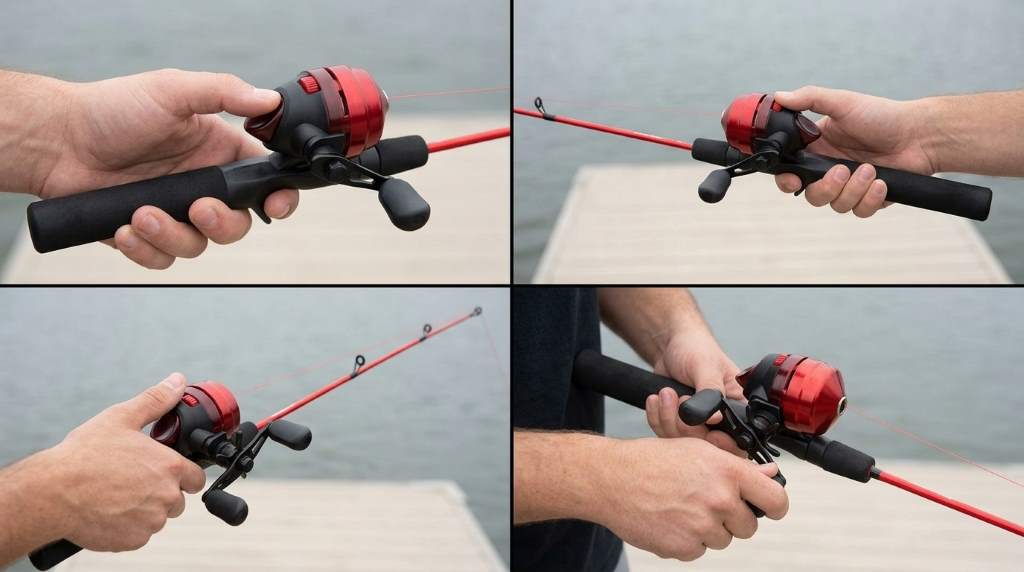
The easiest method starts with proper line setup, a light lure, and controlled button release. The Zebco Dock Demon Spincast Combo uses a 30 inch fiberglass rod with a right hand spincast reel. Its rated line range runs from 2 to 6 pounds, while its lure range spans 1/64 to 1/8 ounce. Zebco says a typical spincast setup can take about 10 minutes to prepare correctly. With the right technique, this compact combo works especially well around docks, banks, ponds, and other tight fishing areas.
Key Takeaways
- Thread the line through every guide before attaching your terminal tackle.
- Keep the spool properly filled to reduce tangles and casting problems.
- Use the thumb button during the loading and forward casting motion.
- Match your lure weight with the rod’s rated 1/64 to 1/8 ounce range.
- Adjust the drag before fishing instead of tightening it during every fight.
- Use short, controlled casts when fishing around docks or heavy cover.
Understand the Dock Demon’s Basic Setup
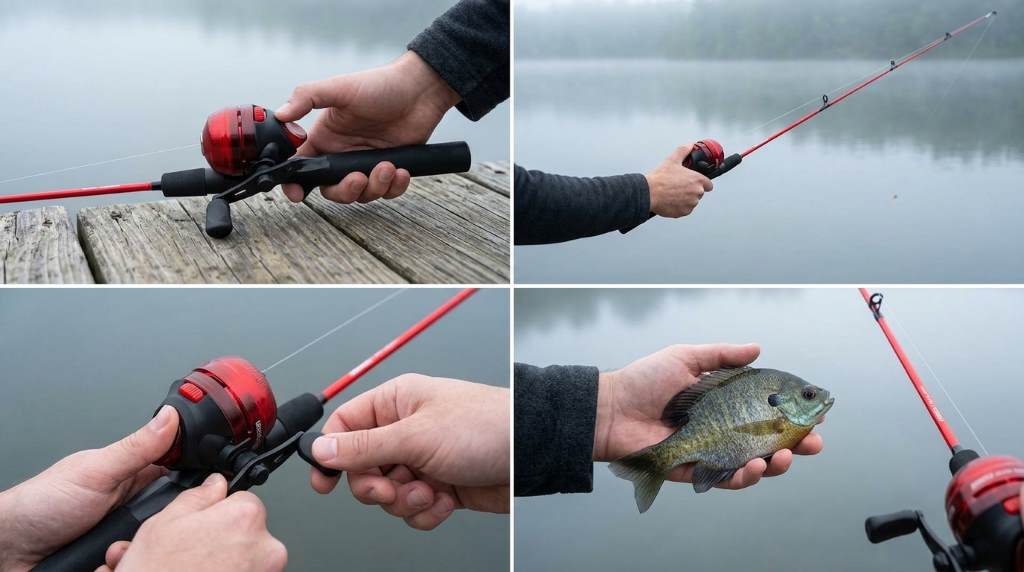
Before casting, learn what each component does and why the compact design matters. The Dock Demon uses a one piece, 30 inch fiberglass rod with medium power and moderate action. Its spincast reel uses all metal gears, QuickSet Anti Reverse, and a dial adjustable drag.
The reel also includes a stainless steel pickup pin and a no tangle design. Additionally, the Twist Lock reel seat keeps the reel attached during normal fishing. The short rod improves control around docks, boats, brush, and narrow shoreline spaces.
| Feature | Dock Demon Specification |
|---|---|
| Rod length | 30 inches |
| Rod construction | One piece fiberglass |
| Power | Medium |
| Action | Moderate |
| Line rating | 2 to 6 pounds |
| Lure rating | 1/64 to 1/8 ounce |
| Gear ratio | 2.6:1 |
| Retrieve | Right hand |
| Pre spooled line | 6 pound monofilament |
| Mono capacity | 100 yards of 6 pound line |
Prepare the Combo Before Your First Cast
Inspect the Rod and Reel
First, check the rod guides for cracks, loose inserts, or visible damage. Then inspect the reel seat and confirm the reel sits firmly against the rod. Finally, turn the handle slowly and make sure the spool and pickup mechanism move normally.
Next, check the line for rough spots, coils, or loose loops around the spool. Fresh line often improves casting when the supplied line has sat unused for a long time. Replace damaged line before fishing rather than troubleshooting repeated tangles later.
Thread the Line Through the Guides
Extend the rod fully and place it in a stable position before threading the line. Start at the reel and pass the line through each guide toward the rod tip. Keep several inches of line beyond the final guide while preparing your rig.
If you replace the factory line, use line that matches the rod’s 2 to 6 pound rating. Avoid filling the spool excessively because extra line can create loops and tangles. Likewise, an underfilled spool can reduce casting distance and make light lures harder to launch.
Attach the Right Bait or Lure
Use Small Lures Within the Rating
The Dock Demon handles lightweight presentations particularly well when you stay within its lure rating. Small jigs, inline spinners, hooks with live bait, and compact soft plastics can suit this setup. However, oversized lures can overload the short rod and make accurate casting harder.
For beginners, start with a simple bait rig that provides predictable casting weight. A small hook with a split shot can work well for panfish in suitable waters. Alternatively, a tiny jig can provide a straightforward setup for active fish.
Tie a Reliable Knot
A Palomar knot offers a simple connection for many small hooks and lures. Pass the doubled line through the eye, then form the knot and pass the lure through its loop. Pull the standing line steadily and trim the tag end after the knot seats.
Before casting, test the knot with gentle pressure rather than trusting it immediately. A properly seated knot should remain compact without slipping. Also inspect the hook eye for sharp edges that could damage light monofilament.
Set the Drag Before Fishing
The drag controls how much resistance a fish feels when it pulls line from the reel. Start with moderate resistance instead of locking the drag completely. This approach gives light line some protection when a fish makes a sudden run.
Pull the line manually while holding the rod in a normal fishing position. Increase drag gradually until the line releases with firm, controlled pressure. Because this combo uses light line, avoid forcing large fish with excessive drag pressure.
The Dock Demon’s compact reel also has a relatively slow 2.6:1 gear ratio. Therefore, expect a slower retrieve compared with many modern spinning reels. Use that slower pace to control small presentations rather than trying to recover line aggressively.
Learn the Correct Spincast Casting Motion
Position Your Hand Correctly
Hold the rod comfortably with your dominant hand and place your thumb over the release button. Keep your grip firm enough for control without squeezing the handle excessively. Point the rod toward your intended casting area before starting the motion.
Load and Release the Rod
Press and hold the button to prepare the reel for casting. Move the rod backward smoothly, then accelerate it forward toward your target. Release the button when the rod tip points toward the intended landing area.
Do not snap your wrist aggressively because the short rod needs only a controlled motion. Instead, allow the rod to load and push the lure forward naturally. After the lure lands, press the button again to stop unwanted line movement.
Practice this movement with a lightweight practice plug before using a hook. Start with short casts and focus on consistent release timing. Gradually increase distance only after your casts land where you intend.
Improve Accuracy Around Docks and Shorelines
The Dock Demon works best when you use its compact size to your advantage. Short casts can place bait beside posts, vegetation edges, boat slips, and shoreline cover. You can also make quick repeated casts without managing a long rod around nearby obstacles.
Keep your target slightly ahead of the lure’s intended landing point. This gives the bait room to travel during the final part of the cast. Furthermore, release the button slightly earlier when you need a higher trajectory.
For tight targets, reduce casting power instead of forcing the release. A smooth motion provides better control than a hard throw with this short rod. Consequently, beginners can build accuracy without fighting the equipment.
Use the Combo for Suitable Fishing Situations
This setup makes sense for close range freshwater fishing where compact equipment provides a practical advantage. Panfish, small bass, stocked trout, and similar light duty targets can suit its design. Dock fishing also benefits from the short rod because nearby structures can limit movement.
However, avoid treating this compact combo like a heavy duty casting setup. Its light line rating limits the pressure you can safely apply during a fish fight. Likewise, its short length reduces leverage and casting distance compared with longer rods.
- Dock and pier fishing
- Small ponds and calm shoreline areas
- Panfish and other light freshwater species
- Short range casting around cover
- Beginner fishing practice
- Compact backup fishing setups
Control a Fish Without Breaking Light Line
When a fish strikes, avoid immediately pulling hard against it. Keep the rod angled upward and let the drag absorb sudden runs. Maintain steady pressure while guiding the fish away from obvious snags.
Because the rod measures only 30 inches, you have less leverage than longer rods provide. Therefore, body positioning becomes more important during a fight. Move your feet when possible and keep the line clear from dock edges or vegetation.
When the fish approaches, avoid lifting it using the rod alone. Use a landing net when appropriate, especially around docks or elevated banks. This reduces unnecessary stress on the rod, reel, line, and hook connection.
Troubleshoot Common Casting Problems
Line Tangles Near the Spool
Check whether the spool contains too much line or loose coils. Then inspect the line for twists created by repeated casting and retrieval. Remove damaged sections and respool the reel when loose loops continue appearing.
The Lure Falls Short
First, confirm that the lure falls within the rod’s rated weight range. Next, inspect the line for excess memory, damage, or poor spool filling. A smooth forward motion can also improve distance more than simply casting harder.
The Reel Feels Rough
Stop fishing if the handle suddenly becomes unusually rough or difficult to turn. Check for sand, grit, moisture, or line trapped around moving parts. Clean the accessible exterior and follow the manufacturer’s maintenance guidance before continued use.
The Fish Pulls Too Much Line
Check the drag instead of tightening it aggressively during the fight. Excessive drag pressure can place unnecessary stress on light monofilament. Maintain steady rod pressure and allow the drag to perform its intended function.
Maintain the Combo After Every Trip
Good maintenance starts immediately after you finish fishing. Wipe the rod and reel with a clean cloth to remove moisture, dirt, and residue. If the setup contacts saltwater, rinse the exterior gently with fresh water afterward.
Do not store the combo while the line remains heavily wet or tangled. Let the equipment dry naturally before placing it inside a tackle box or vehicle. Additionally, inspect the line periodically and replace it when you notice abrasion, severe memory, or weakened sections.
Keep the reel protected from unnecessary impacts during transportation. The fiberglass rod offers useful durability, but the reel still contains moving mechanical parts. A simple protective sleeve or dedicated storage compartment can prevent avoidable damage.
Build a Simple Dock Demon Fishing Kit
You do not need a large tackle collection to get useful results from this compact combo. Start with a few small hooks, lightweight jigs, split shot weights, bobbers, and suitable live bait. Add line clippers, spare monofilament, and a small landing net for practical support.
Keep several lure sizes within the rod’s rating rather than carrying oversized tackle. This keeps the setup balanced and simplifies decisions during short fishing sessions. Moreover, spare line helps you recover quickly after a snag or damaged leader.
A Simple First Trip Routine
- Inspect the rod, reel, guides, and line before leaving.
- Confirm the drag moves smoothly and provides moderate resistance.
- Choose a lure between 1/64 and 1/8 ounce.
- Check the knot carefully before making the first cast.
- Practice two or three short casts before targeting fish.
- Keep casts controlled around docks, posts, and vegetation.
- Maintain steady pressure when fighting a hooked fish.
- Rinse and dry the equipment after the trip.
Frequently Asked Questions
Is the Dock Demon easy for beginners?
Yes, its push button spincast reel makes basic casting simple for beginners.
What line should I use with the Dock Demon?
Use monofilament within the 2 to 6 pound line rating.
How far can a Dock Demon cast?
Its short 30 inch rod favors controlled close range casts rather than maximum distance.
Can you use live bait with this combo?
Yes, small hooks, split shot weights, and suitable live bait can work effectively.
How should you clean the Dock Demon?
Wipe it after use, rinse saltwater exposure gently, and let every component dry before storage.
Final Tips for Better Results
The Dock Demon rewards smooth technique more than aggressive casting power. Keep your tackle light, maintain reasonable drag pressure, and focus on accurate placement. Those habits help you get more control from this compact fishing setup.
Most problems also become easier to prevent when you inspect the line before each outing. Take a few practice casts, watch your release timing, and replace worn line promptly. If you use the combo within its intended limits, it can provide a simple and enjoyable fishing experience.
Before your next trip, rig the combo at home and practice several short casts. Then take the setup to a suitable fishing spot and start with light presentations. Build your technique gradually, and let the compact design work to your advantage.