Nina Taylor
Stepping into a tackle shop or Browse online reveals a dizzying array of fishing lures, each promising to be the secret weapon you need. But beyond the colors, shapes, and actions, there’s a fundamental characteristic that often gets overlooked, yet dramatically impacts your success: lure weight. Get it right, and your bait swims perfectly, reaches the strike zone, and feels alive on the end of your line. Get it wrong, and you might struggle with casting, presentation, or even detecting bites.
Among the most common, and sometimes confusing, choices for finesse and light tackle applications are the 1/8 oz and 3/16 oz weights. The difference seems minuscule – just 1/16th of an ounce (or 0.0625 oz / 1.77 grams, to be precise) – but on the water, this tiny variance translates into significant performance changes. Are you battling finicky bass in shallow, clear water? Or perhaps trying to reach fish holding slightly deeper in a light breeze? Choosing between 1/8 oz and 3/16 oz can be the key. This guide will dive deep into the nuances of each weight, helping you understand when to tie on which, and ultimately, put more fish in the boat.
Why Does Lure Weight Even Matter?
Before we pit 1/8 oz against 3/16 oz, let’s quickly recap why lure weight is such a critical factor in your fishing setup. It influences several key aspects of your presentation:
- Casting Distance and Accuracy: Heavier lures generally cast farther and with more accuracy (especially in wind), as they more effectively “load” the fishing rod during the casting motion. Lighter lures require lighter action rods and lines to achieve optimal casting performance.
- Depth Control: The weight determines how quickly your lure sinks and how easily it stays at a desired depth during the retrieve. Heavier weights get down faster and stay deeper, while lighter weights are suited for shallower presentations.
- Fall Rate: This is crucial for techniques where the bait’s action on the fall triggers bites (like jigs, Texas rigs, or drop shots). A lighter weight provides a slower, often more natural descent, while a heavier weight creates a faster drop, which can sometimes trigger reaction strikes.
- Action Imparted: The weight can influence the inherent action of the lure or the action you impart with your rod. Too much weight can deaden the subtle movements of finesse baits, while the right weight allows them to move naturally.
- Sensitivity and Feel: You need enough weight to maintain contact with your lure, especially when fishing bottom-contact techniques. This allows you to feel subtle changes in bottom composition (rock, mud, sand) and detect light bites. Wind and current can make it harder to feel lighter lures.
Understanding these principles is fundamental to appreciating the specific roles the 1/8 oz and 3/16 oz weights play.
Getting Delicate: The Case for the 1/8 oz Lure
The 1/8 ounce (0.125 oz or approx. 3.5 grams) weight is often considered a cornerstone of finesse fishing. It’s light, subtle, and allows for an incredibly natural presentation when paired with the right soft plastics or small hard baits.
Characteristics and Performance
Think “stealth” and “natural.” The 1/8 oz weight provides a slow, tantalizing fall that mimics natural forage drifting downwards or lightly swimming. It lands softly on the water, reducing the chance of spooking wary fish in clear or shallow conditions. Because it’s light, it allows finesse baits like small worms, creatures, or tubes to exhibit their inherent action with minimal impedance. Paired typically with light line (4-8lb test) and light to medium-light power spinning rods, it maximizes sensitivity for detecting those almost imperceptible “mushy” bites common with finesse tactics.
Ideal Scenarios for 1/8 oz
This weight truly shines in specific situations:
- Shallow Water: When fish are holding in less than 8-10 feet of water, a 1/8 oz weight gets your bait down without plummeting past the fish or immediately snagging on the bottom.
- Calm Conditions: Little to no wind or current is ideal. Stronger forces can easily push a 1/8 oz lure off target, make it difficult to feel, or cause excessive line bow, hindering bite detection and hooksets.
- High-Pressure/Finicky Fish: After a cold front, during post-spawn funk, or on heavily pressured waters, fish often prefer a slower-moving, less intrusive presentation. The subtle action provided by the 1/8 oz weight is perfect for coaxing bites from reluctant fish.
- Clear Water: Visibility is high, and fish can be easily spooked. The soft entry and slow fall of a 1/8 oz lure appear less threatening.
- Targeting Panfish: It’s an excellent weight for crappie jigs, small swimbaits for perch, or targeting larger bluegill.
Pros and Cons
- Pros: Extremely natural presentation, slow fall rate, excellent for shallow/calm conditions, maximizes bait action, stealthy entry, great for finesse techniques.
- Cons: Limited casting distance (especially with wind), poor performance in current or wind, can be difficult to maintain bottom contact in deeper water, slower coverage of water.
Popular Pairings
The 1/8 oz weight is commonly found on or paired with:
- Ned Rigs
- Small jig heads (ball heads, mushroom heads) for finesse worms or grubs
- Drop shot weights (especially for vertical presentations or shallow water)
- Neko rig weights (inserted screw-in or nail weights)
- Micro jigs or hair jigs
- Small spinnerbaits or bladed jigs (like the Z-Man Micro Chatterbait) for pond fishing or targeting smaller species.
- Small crankbaits designed for shallow water.
Stepping It Up (Slightly): The Versatile 3/16 oz Lure
Sitting precisely between 1/8 oz and 1/4 oz, the 3/16 ounce (0.1875 oz or approx. 5.3 grams) weight is often hailed as the unsung hero of finesse and light-tackle fishing. It offers a tangible step up in performance from the 1/8 oz without crossing into the territory of significantly heavier weights.
Characteristics and Performance
The 3/16 oz weight provides a noticeable increase in casting distance and a slightly faster fall rate compared to the 1/8 oz. This makes it easier to manage in a light breeze or slight current and allows for more efficient coverage of water. It still allows for good bait action, though slightly less subtle than the 1/8 oz, and provides better feedback and bottom contact, especially as depths increase slightly or wind picks up. Many anglers find it a “sweet spot” – heavy enough to feel and cast effectively in many conditions, but light enough to maintain a finesse profile. It bridges the gap, performing well on both spinning gear and, for skilled anglers, on baitcasting setups designed for lighter lures (BFS – Bait Finesse System).
Ideal Scenarios for 3/16 oz
This weight proves its worth when:
- Moderate Depths: Fishing in the 8-15 foot range, where the 1/8 oz might be too slow or hard to feel.
- Light Wind or Current: When conditions are just enough to make the 1/8 oz uncontrollable, the 3/16 oz provides the necessary stability and contact.
- Light Cover: Needing just a bit more weight to punch through sparse vegetation or get down beside dock pilings.
- Searching Water: When you need to cover water slightly faster than a super-slow finesse approach allows, but still want a relatively subtle presentation.
- Slightly Larger Finesse Baits: Pairing with 4-5 inch worms, smaller creature baits, or compact swimbaits where the 1/8 oz feels insufficient.
- When 1/8 oz is Too Light & 1/4 oz is Too Heavy: This is its prime niche – the perfect compromise weight. Experienced anglers often test different weights and find the 3/16 oz hits the perfect balance for generating bites while maintaining control.
Pros and Cons
- Pros: Increased casting distance vs. 1/8 oz, better performance in light wind/current, faster sink rate for slightly deeper water, good sensitivity/bottom contact, highly versatile “in-between” weight.
- Cons: Faster fall may be less desirable for ultra-finicky fish, slightly less natural action than 1/8 oz, can still be challenging in moderate-to-heavy wind/current.
Popular Pairings
The 3/16 oz size is a popular choice for:
- Shaky Head Jigs (a very common weight for this technique)
- Drop Shot Weights (a go-to size for many conditions)
- Texas-rigged finesse worms or creature baits
- Small swimbaits on jig heads
- Compact flipping/pitching jigs
- Smaller spinnerbaits (like the Booyah Pond Magic)
- Certain styles of crankbaits (like the Rapala Countdown CD05).
Related: Why Aren’t Fish Biting My Lure? 7 Mistakes Anglers Make
The Showdown: 1/8 oz vs. 3/16 oz Head-to-Head
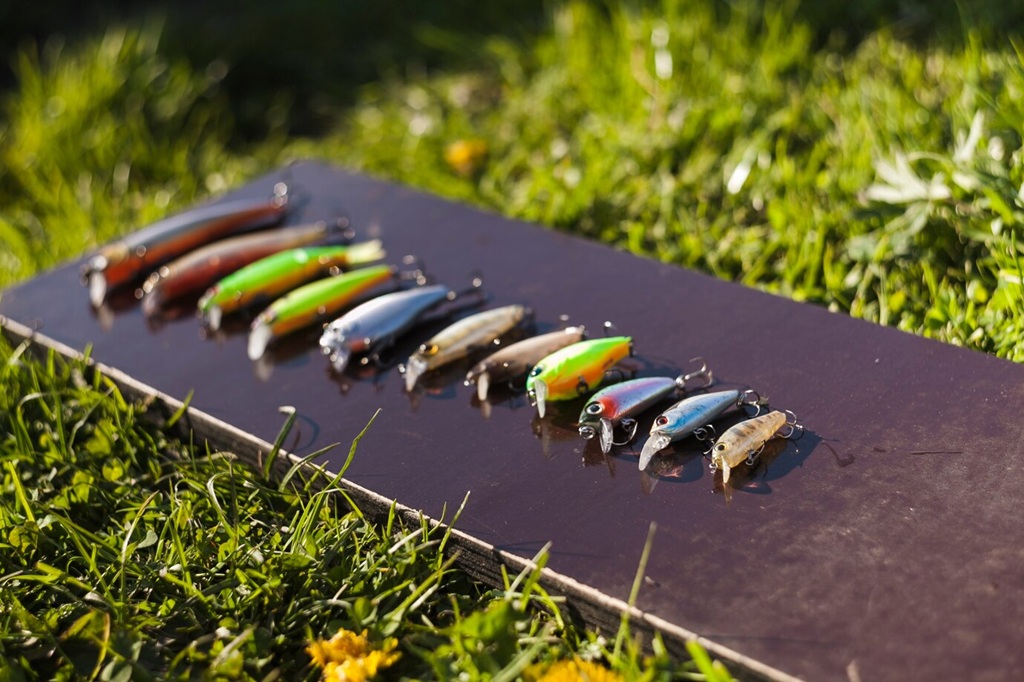
Let’s directly compare these two finesse favorites across key performance metrics:
- Casting Distance & Wind Performance: Advantage 3/16 oz. The extra mass cuts through the air better and loads the rod more effectively, resulting in longer casts and better control in breezy conditions. The 1/8 oz struggles significantly once the wind picks up.
- Depth Capability & Sink Rate: Advantage 3/16 oz. It gets down faster and maintains depth more easily, making it better suited for water deeper than about 10 feet or when needing to counteract slight current. The 1/8 oz offers a slower, more horizontal presentation ideal for the shallows.
- Subtlety & Natural Action: Advantage 1/8 oz. Its lighter weight allows soft plastics to move more freely and naturally mimics slowly falling or swimming forage. It excels when fish demand the most unobtrusive presentation. The 3/16 oz, while still relatively light, imparts a slightly faster, potentially more aggressive action.
- Sensitivity & Bottom Contact: Generally Advantage 3/16 oz, especially as depth or wind increases. The added weight makes it easier to discern bottom composition and detect subtle bites transmitted up the line. However, in very calm, shallow water with light line, the 1/8 oz can offer exquisite sensitivity.
- Versatility: Arguably Advantage 3/16 oz. It competently handles a wider range of conditions (depth, wind, current) and lure types than the more specialized 1/8 oz. It’s often the “do-it-all” finesse weight when conditions aren’t extreme.
Making Your Decision: Factors Beyond Just Ounces
Choosing between 1/8 oz and 3/16 oz isn’t just about the weight itself. Consider the entire system:
- The Environment: How deep is the water? Is it windy? Is there current? How clear is the water? These are paramount. Calm, clear, shallow = lean towards 1/8 oz. A bit deeper, windier, or stained = lean towards 3/16 oz.
- Your Gear: What rod and line are you using? A Medium-Light rod with 6lb line will cast a 1/8 oz lure much better than a Medium-Heavy rod with 15lb line. Match the lure weight to your rod’s optimal casting range (usually printed on the blank near the handle). While you can cast lures outside this range, performance suffers, and casting significantly overweight lures risks rod damage. Remember to factor in the weight of your hook and soft plastic – a 1/8 oz weight plus a bulky plastic and hook might actually weigh closer to 1/4 oz in total.
- The Target: What species are you after? Are they actively feeding or negative? What size is the primary forage? Smaller forage or finicky fish often call for the 1/8 oz. If fish are slightly more aggressive or keying on slightly larger bait, the 3/16 oz might be better.
Related: What Does Lure Do on a Fishing Rod?
People Also Ask: Your Lure Weight FAQs Answered
-
Is 3/16 oz heavier than 1/8 oz?
Yes. 3/16 oz (0.1875 oz) is mathematically heavier than 1/8 oz (0.125 oz). The difference is 1/16 oz.
-
When should I use a 1/8 oz jig?
Use a 1/8 oz jig in shallow water (less than 10 feet), calm conditions (minimal wind/current), clear water, when targeting panfish, or when bass are highly pressured and require a slow, natural finesse presentation. It pairs well with small plastics like Ned rig baits or finesse worms.
-
What is a 3/16 oz weight good for?
A 3/16 oz weight is excellent for slightly deeper water (8-15 feet), light wind or current, penetrating sparse cover, fishing shaky heads, drop shots, or Texas-rigged finesse baits. It’s a versatile weight offering better casting and feel than 1/8 oz while remaining relatively subtle.
-
Can I use these weights for saltwater fishing?
Yes, both weights can be used in saltwater, particularly inshore or on flats for species like speckled trout, redfish, or flounder, especially when conditions are calm and shallow or finesse tactics are needed. However, saltwater often involves stronger currents and winds, frequently requiring heavier weights (1/4 oz and up).
-
How does line size affect lure weight choice?
Lighter lines (e.g., 4-8 lb test fluorocarbon or braid with leader) cast lighter lures like 1/8 oz and 3/16 oz much more effectively than heavier lines. Heavier lines create more drag in the air and water, reducing casting distance and hindering the natural fall of light lures. Match your line size to your rod power and the lure weights you intend to throw.
The Final Cast: Conclusion
The choice between a 1/8 oz and 3/16 oz lure weight isn’t always clear-cut, but understanding their respective strengths and weaknesses empowers you to make better decisions on the water. The 1/8 oz is the finesse specialist, excelling in calm, shallow situations where subtlety reigns supreme. The 3/16 oz is the versatile workhorse, bridging the gap and providing enhanced performance in a wider range of conditions often encountered by bass anglers.
The best advice? Carry both. Conditions change, fish moods fluctuate, and what worked an hour ago might not work now. Start with the lightest weight you can effectively fish given the depth, wind, and current. If you’re struggling to feel the bait, maintain bottom contact, or cast effectively, step up to the 3/16 oz. If the bite is tough and you suspect your presentation is too aggressive or sinking too fast, downsize to the 1/8 oz. Experimentation and paying close attention to how your lure feels and performs are your greatest assets. Mastering these subtle weight adjustments is a hallmark of a skilled angler and will undoubtedly lead to more bites and more fish landed.