
 Isaiah Parker
Fishing gear is an investment, and proper care extends its lifespan. Exposure to moisture, sunlight, and dirt can degrade even high-quality tackle. If you want your fishing gear to last for years, you need to protect it from the elements. Moisture causes rust, UV rays weaken materials, and dirt affects performance. A little effort can prevent costly replacements. In this guide, you’ll learn how to protect your fishing tackle from the elements.
The Effects of the Elements on Fishing Tackle
Moisture and Rust Damage
Water exposure is the biggest enemy of fishing gear. When hooks, reels, and lures stay wet, rust forms. According to a study by the American Fishing Tackle Manufacturers Association, rust reduces a hook’s strength by 30%. This weakens your tackle and makes it unreliable.
Saltwater is even worse. It corrodes metal ten times faster than freshwater. If you’re fishing in saltwater, your gear needs extra protection.
UV Rays and Material Breakdown
Sunlight weakens fishing lines, rods, and tackle boxes. Prolonged UV exposure makes plastic brittle and weakens braided and monofilament lines. According to Fishing World Magazine, monofilament lines lose 20% of their strength after a few months of sun exposure.
Dirt, Sand, and Debris
Fine particles get into reels and damage internal mechanisms. Sand can clog moving parts, making reels less effective. Even soft plastics and lures wear down when exposed to dirt for too long.
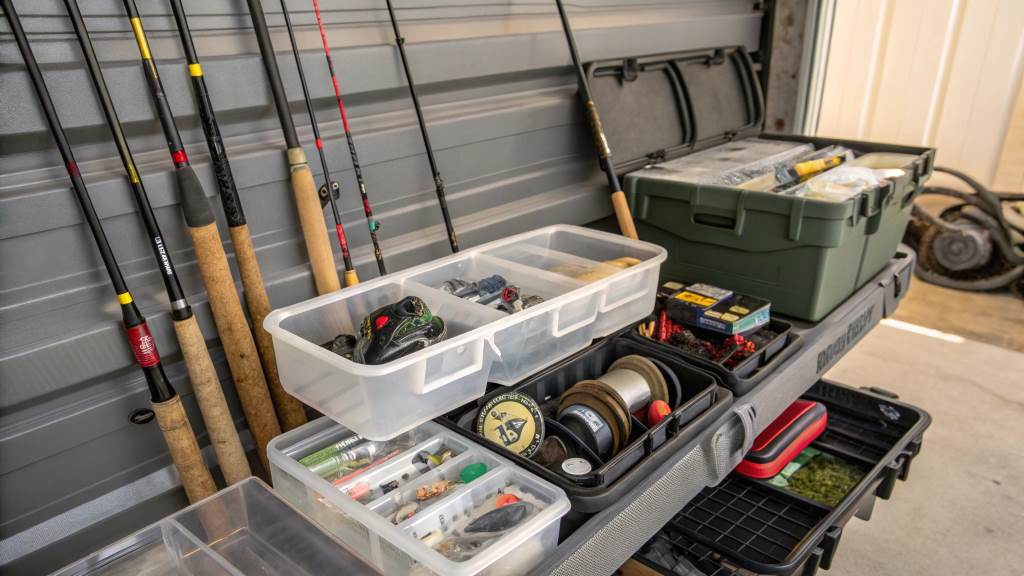
Best Ways to Protect Your Fishing Tackle
1. Proper Storage Solutions
Use a Waterproof Tackle Box
A high-quality, waterproof tackle box is the first line of defense. Look for boxes with rubber seals to keep moisture out. The Plano Guide Series Waterproof Case is a top choice among anglers.
Organize Your Tackle Efficiently
Dividers prevent metal tackle from clumping together and rusting. Use silica gel packs inside the box to absorb moisture. This simple trick helps reduce humidity buildup.
2. Cleaning and Maintenance Tips
Rinse and Dry Your Gear After Every Trip
Always rinse your reels, hooks, and lures with fresh water after fishing. Salt and dirt cause corrosion and weaken materials. Dry everything completely before storing it.
Lubricate Your Reels
Regular lubrication prevents metal-on-metal wear. Use a high-quality reel oil like Penn Reel Oil to keep moving parts smooth.
3. Protecting Against Rust and Corrosion
Apply Anti-Rust Coatings
Spray metal parts with corrosion inhibitors like WD-40 or Reel Magic. These create a protective barrier against moisture.
Use Rust-Resistant Hooks
Opt for stainless steel or nickel-coated hooks. These materials resist rust better than traditional steel hooks.
4. UV Protection for Your Gear
Store Tackle Away from Direct Sunlight
Keep tackle boxes in shaded areas when fishing. Store rods and reels indoors to prevent long-term sun damage.
Use UV-Protective Coatings
Fishing lines and soft plastics degrade faster in the sun. Apply a UV-protectant spray to prolong their lifespan.
5. Preventing Dirt and Sand Damage
Keep Reels Covered
Use reel covers when storing or transporting reels. This prevents dust and sand from entering the mechanisms.
Clean Your Tackle Box Regularly
Remove dirt and debris from your tackle box every few weeks. A quick wipe-down helps prevent buildup.
Seasonal Care for Fishing Tackle
Summer Protection Tips
- Store gear in a cool, dry place to prevent heat damage.
- Avoid leaving tackle in a hot car, as heat weakens materials.
Winter Storage Strategies
- Remove fishing lines from reels to prevent memory coils.
- Keep gear in a climate-controlled space to prevent moisture buildup.
Year-Round Maintenance Habits
- Inspect tackle for signs of wear before every trip.
- Replace rusted hooks and weakened fishing lines immediately.
Expert Recommendations for Long-Term Gear Care
Invest in High-Quality Gear
Cheap tackle corrodes faster. Investing in premium gear saves money in the long run.
Rotate Your Gear
Using the same tackle repeatedly wears it down faster. Switch up your gear to extend its lifespan.
Keep a Maintenance Schedule
Regular cleaning and lubrication keep everything working smoothly. Mark maintenance days on your calendar.
FAQs
1. How do I prevent my fishing hooks from rusting?
Rinse hooks with fresh water, dry them completely, and store them in a dry tackle box with silica gel packs.
2. Can I use WD-40 on my fishing reels?
WD-40 can prevent rust, but it’s not ideal for lubricating reels. Use a dedicated reel oil for better performance.
3. How do I protect my fishing line from UV damage?
Store fishing lines in a cool, dark place and use a UV-protectant spray to reduce sun damage.
4. What’s the best way to store fishing tackle in winter?
Keep tackle in a dry, climate-controlled area. Remove fishing lines from reels to prevent damage.
5. How often should I clean my fishing reels?
Clean reels after every fishing trip, especially if you’ve been in saltwater. Lubricate them every few weeks for smooth operation.
Conclusion
Protecting your fishing tackle from the elements saves you money and ensures peak performance. By using waterproof storage, cleaning your gear, and preventing rust, you can keep your tackle in top condition. Small maintenance habits make a big difference. Follow these expert tips, and your gear will stay reliable for years to come.


