Nina Taylor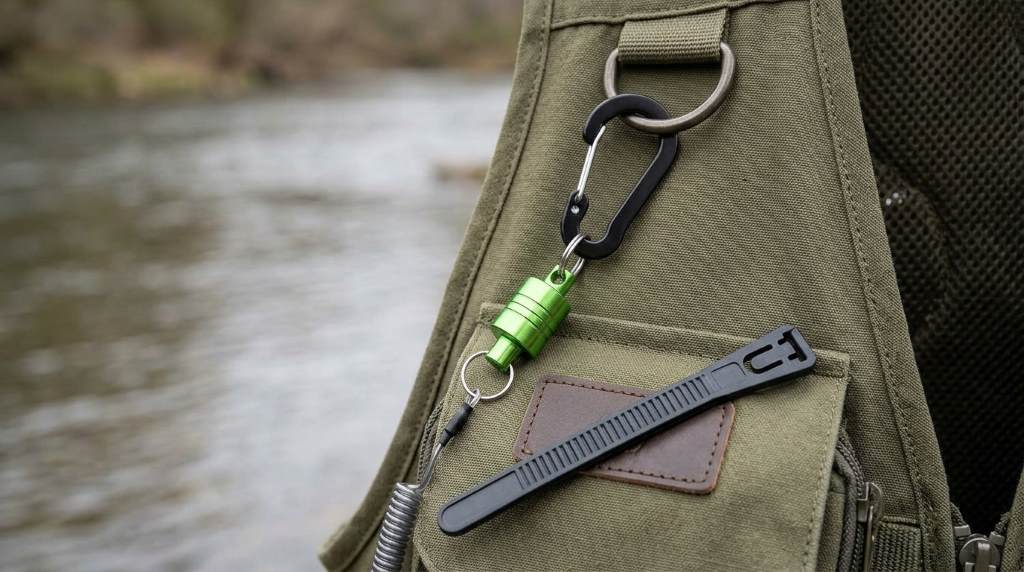
Using an SF Fly Fishing Net Release takes only a few steps once you understand the magnetic system. Attach one magnet to your vest or pack, connect the other to your net, then use the tether as backup. The SF Fly Fishing Net Release can extend about 100 inches when fully stretched, while its compact cord measures roughly 35 centimeters. Therefore, correct positioning matters more than pulling strength when you need the net quickly.
Key Takeaways
- Attach the fixed magnet where your dominant hand can reach it naturally.
- Connect the second magnet securely to the net handle or nearby ring.
- Keep the coiled tether attached even when the magnets feel extremely strong.
- Practice one handed removal before fishing moving water or crowded banks.
- Return the net by bringing the magnets together instead of forcing alignment.
- Clean the magnets, clip, cord, and net connection after regular use.
Understand How the SF Net Release Works
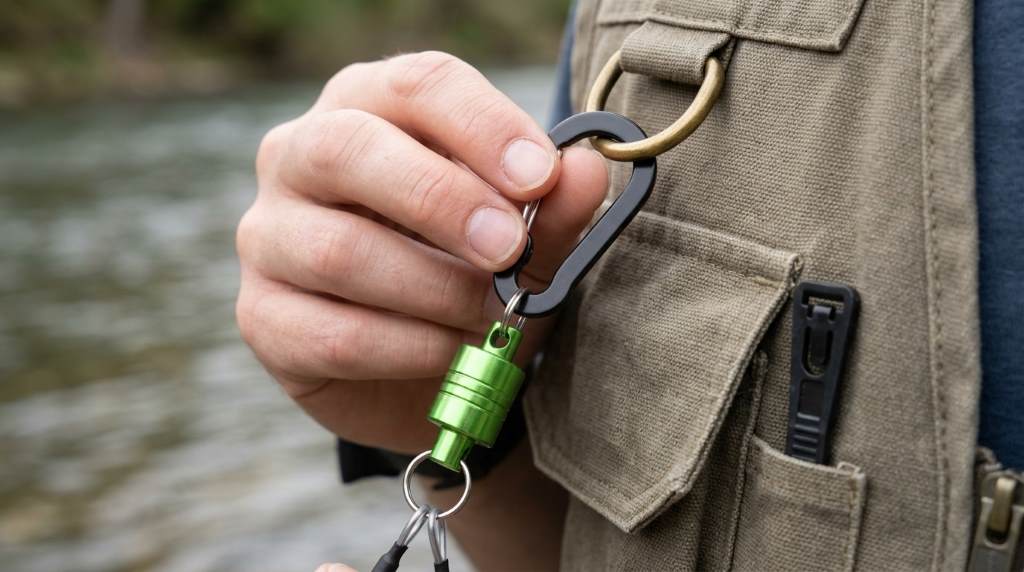
The SF system uses two magnetic connection points to keep your landing net accessible. One side attaches to your clothing or fishing pack, while the other connects with the net.
Meanwhile, a coiled cord links the system and helps prevent accidental net loss. When you pull the net away, the magnets separate while the tether keeps everything connected.
This design solves a common problem during fly fishing because your rod hand often remains occupied. Consequently, you can reach behind your body, release the net, and land the fish with minimal movement.
Know the Main Components
Before fishing, identify the magnet, carabiner, coiled cord, attachment ring, and net connection point. Understanding each component makes setup easier and helps you spot loose connections before they cause trouble.
- Fixed magnet: Connects to your vest, pack, belt, or another secure attachment point.
- Net magnet: Connects directly to the landing net or its attachment hardware.
- Coiled cord: Keeps the net connected after magnetic separation.
- Carabiner: Provides a quick attachment point for the release system.
- Swivel ring: Helps reduce cord twisting when the net moves around your body.
Set Up the Release Before Your First Cast
Start by inspecting every connection point before you enter the water. Check the magnets for dirt, examine the cord for damage, and confirm that every clip closes completely.
Next, attach the fixed side to a strong D ring, pack loop, belt attachment, or suitable vest point. Avoid thin fabric loops that can tear when you pull the net away.
Then connect the other side to the net’s handle ring or designated attachment point. Keep the connection close enough to the handle that the net remains balanced during movement.
Position the Fixed Magnet Correctly
Place the fixed magnet behind your shoulder or slightly toward your dominant side. This position keeps the net away from your casting arm while preserving quick access.
However, test the position before committing to it for a full fishing session. Reach backward naturally with your dominant hand and confirm that your fingers find the net without searching.
If you struggle to reach the release, move it slightly lower or toward your dominant side. A few inches can make a major difference during a fast landing sequence.
Attach the Net Side Securely
Attach the net side to the manufacturer’s intended ring or connection hardware. If your net has a 360 degree swivel ring, use that point to reduce twisting.
After connecting everything, pull the net gently away from the fixed magnet. The magnets should separate smoothly without pulling the attachment hardware loose.
Finally, let the net hang naturally and inspect the cord path. The cord should remain clear of hooks, fly line, clothing, and other fishing accessories.
Learn the One Handed Release Technique
Once the system sits correctly, practice removing the net without looking backward. Hold your rod securely, reach toward the release, and pull the net outward.
The magnets should separate without requiring excessive force or awkward body movement. If you need to twist your shoulder sharply, adjust the attachment location before fishing.
Next, extend the net forward while keeping the cord away from your rod and line. This movement should feel natural after several dry practice repetitions.
Most importantly, avoid grabbing the magnet itself when you need the net quickly. Grab the net handle or frame so you maintain better control during landing.
Practice Before Landing a Fish
Practice the complete sequence beside your vehicle, at home, or on dry ground. Pretend that your rod hand holds a fish while your other hand retrieves the net.
Repeat the movement several times until your hand finds the release automatically. Then practice returning the net without looking behind you.
This simple drill reduces hesitation when a fish reaches the bank. It also helps reveal problems with cord length, attachment position, or magnet alignment.
Use the Net During a Fish Landing
When a fish approaches, keep your rod hand focused on controlling the fish. Reach backward with your free hand and separate the magnetic connection smoothly.
Then extend the net toward the fish while maintaining steady pressure with the rod. Keep the net below the fish rather than chasing its head from behind.
Guide the fish toward the center of the net opening. Once the head enters, lift the hoop gently while maintaining control through the rod.
After landing the fish, keep the net in the water whenever practical. This approach supports safer catch and release while giving you better control.
Keep the Net Ready Instead of Dropping It
The tether allows you to release the net from your hand without losing it downstream. Therefore, you can focus on removing the hook and preparing the fish for release.
However, never treat the magnet or cord as a reason to throw the net into fast current. Keep the net close enough to retrieve without creating unnecessary tension.
If you need both hands briefly, let the tether support the net while keeping the fish submerged. This technique reduces handling time and prevents the net from becoming another distraction.
Handle Trout Safely After Netting
A good net release does more than improve convenience. It also gives you a controlled way to keep the fish supported while you remove the hook.
First, wet your hands before touching the fish. Next, keep the fish inside the wet net while you prepare your release tools.
Remove the hook quickly and avoid touching the gills. Support the fish gently instead of squeezing its body or holding it vertically by the jaw.
When you want a photograph, prepare the camera before lifting the fish. Keep air exposure extremely short, then return the fish to the water.
Use the Net as a Holding Area
The soft rubber mesh can help keep the fish contained while you work. Still, never drag the net across rocks or dry surfaces.
Keep the basket submerged whenever possible during catch and release. This setup gives the fish support while reducing unnecessary handling.
Once the fish recovers, face it into gentle current and allow it to swim away naturally. Avoid pushing the fish backward through the water because that movement can stress it.
Choose the Right Attachment Location
Your fishing style should determine where you mount the release. Wading anglers usually benefit from a compact position behind the shoulder or near the dominant side.
Meanwhile, anglers using sling packs may prefer the rear section of the shoulder strap. This placement keeps the net accessible without allowing the hoop to interfere with casting.
For belt based systems, position the release where the net handle can hang without hitting your legs. Test the setup while walking before entering uneven terrain.
| Fishing Setup | Useful Release Position | Main Benefit |
|---|---|---|
| Wading vest | Rear D ring | Quick access behind the shoulder |
| Sling pack | Rear shoulder area | Keeps the net away from casting motion |
| Hip pack | Rear or dominant side | Short retrieval path |
| Wading belt | Rear hip area | Simple access during shallow wading |
Prevent Common Magnetic Release Problems
Even a strong magnetic release can perform poorly when dirt, poor positioning, or excessive cord tension interferes. Fortunately, most problems come from setup rather than the basic mechanism.
Magnet Keeps Separating
If the magnet separates while walking, inspect the connection before replacing the system. A loose carabiner, excessive net weight, damaged cord, or poor mounting point can cause unwanted separation.
Move the fixed attachment point if branches repeatedly catch the net. Also, shorten unnecessary cord movement by choosing a more suitable mounting location.
Net Feels Difficult to Pull Free
A release that feels too strong can slow down landing when you need the net immediately. First, check whether the magnets sit directly against each other without sideways pressure.
Next, test the system while wearing your complete fishing setup. Clothing layers and pack straps can change the angle and make removal harder.
If the magnets still require excessive force, reposition the release rather than yanking harder. Stronger pulling can stress attachment points and create unnecessary movement.
Cord Gets Tangled
A tangled cord usually indicates poor routing around nearby equipment. Keep the cord away from fly line, forceps, nippers, straps, and exposed hooks.
After each landing, allow the cord to retract naturally before reconnecting the net. Avoid wrapping the cord tightly around the handle because repeated bends can shorten its useful life.
Maintain the SF Net Release After Fishing
Rinse the release with clean water after fishing in dirty, silty, or salty conditions. Then allow the components to dry before storing the net.
Pay special attention to the magnetic faces because small metal particles can collect around them. Remove debris carefully instead of scraping the magnet with sharp tools.
Inspect the coiled cord regularly for cuts, stretched sections, or damaged connection points. Replace compromised components before relying on them near deep or fast water.
Keep the Magnetic Faces Clean
Clean magnetic surfaces help the two sides connect properly. Wipe away grit before reconnecting the magnets after each fishing session.
Do not store the magnets pressed against loose metal objects. Hooks, split rings, and other tackle can collect around exposed magnetic surfaces.
Make the Release Work With Your Fishing System
The best setup combines the net, release, pack, rod, and wading gear into one working system. You should reach the net without changing your casting grip or losing control of the fish.
Therefore, test the complete setup before your first serious outing. Wear your normal layers, load your pack, attach your tools, and simulate a fish landing.
Notice where the net handle swings when you walk through brush. If the hoop catches branches or hits your legs, change the attachment point before fishing.
This practical test reveals more than simply checking whether the magnets connect. It shows whether the entire carrying system supports fast, controlled movement.
When a Magnetic Release Needs Extra Security
A magnetic connection provides fast access, but you should still use the tether supplied with the system. The tether protects the net if vegetation, equipment, or movement separates the magnets.
Some anglers also add a secondary connection for expensive or frequently used nets. That approach provides another layer of security when fishing remote water.
Never depend on magnet strength alone when losing the net could create a serious problem. A backup tether costs little effort compared with recovering a net downstream.
Quick SF Net Release Setup Checklist
- Inspect the magnet and cord before entering the water.
- Clip the fixed side to a strong attachment point.
- Connect the net side near the handle.
- Confirm that the tether remains connected.
- Test one handed removal with your normal fishing clothing.
- Check that the net stays clear of your casting arm.
- Practice returning the magnets without looking backward.
- Rinse and dry the system after fishing.
Frequently Asked Questions
How do you attach an SF magnetic net release?
Attach one magnet to a secure vest, pack, or belt point and connect the other magnet to the net.
Can you use the SF release with other fishing nets?
Yes, you can use compatible magnetic release hardware with many landing nets that provide a secure attachment point.
Where should a magnetic net release sit?
Place it behind your shoulder or near your dominant side where you can reach it without changing rod control.
Should the net stay tethered after the magnet releases?
Yes, keep the coiled tether connected so the net remains attached after you separate the magnets.
How do you stop the net release from getting tangled?
Route the cord away from fly line, hooks, straps, and other tools before every fishing session.
Final Thoughts
Learning to use an SF net release becomes simple when you treat it as part of your complete fishing setup. Secure the attachment, position it for natural access, practice one handed removal, and keep the tether connected.
Then use the net to shorten handling time and keep released fish supported in the water. Before your next trip, test the entire system on dry ground and adjust anything that feels awkward.
Once the movement becomes automatic, you can focus more attention on controlling the fish and completing a careful release. Use this setup checklist before your next outing and make your landing routine faster and safer.